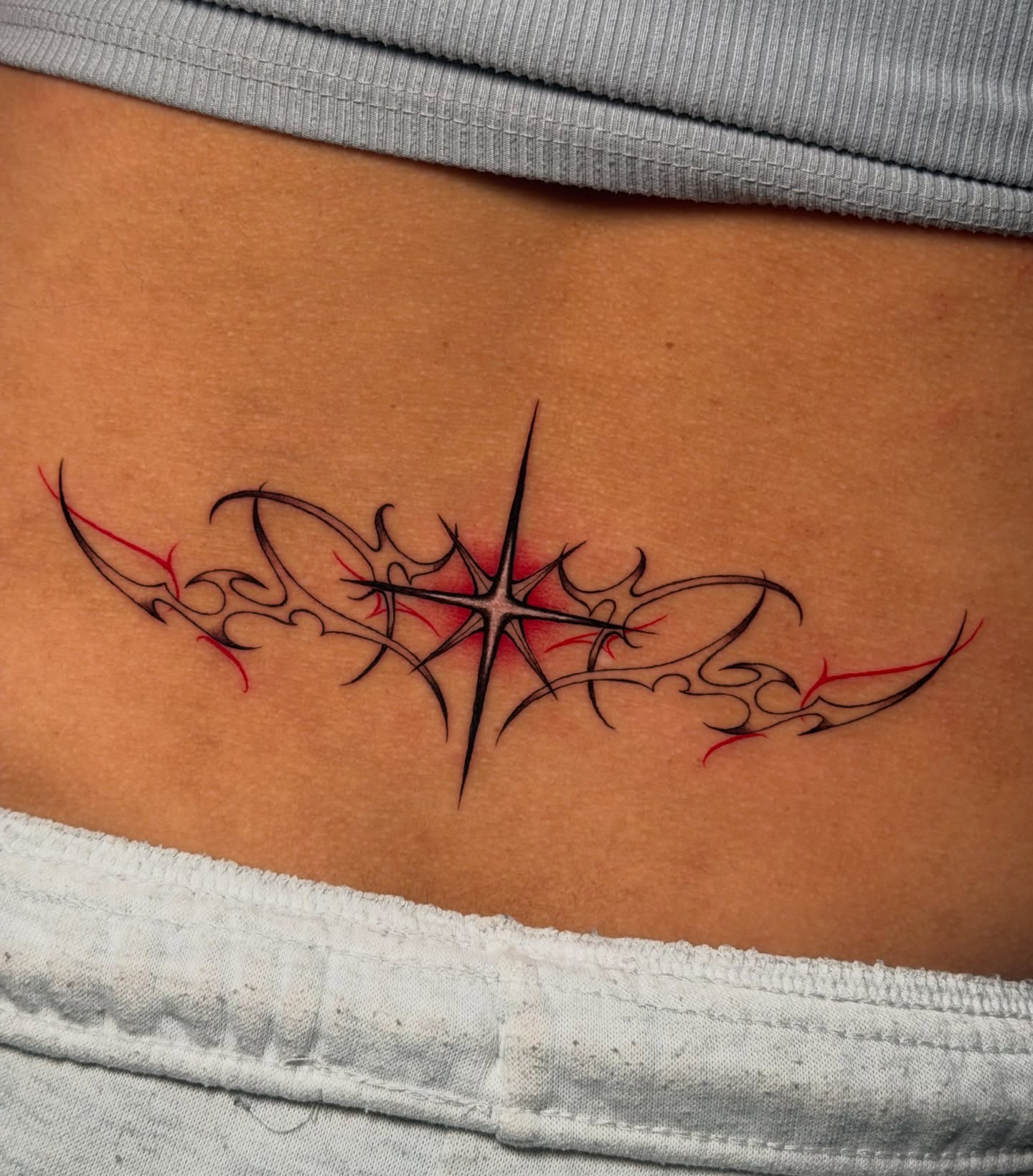
Tribal Star Lower Back
This tramp stamp tattoo features a central star design accented by tribal flame-like patterns in black and red ink. The tribal elements add a dynamic flow, while the centerpiece star symbolizes guidance and protection. The use of red shading enriches the visual contrast making it a bold yet elegant lower back piece.
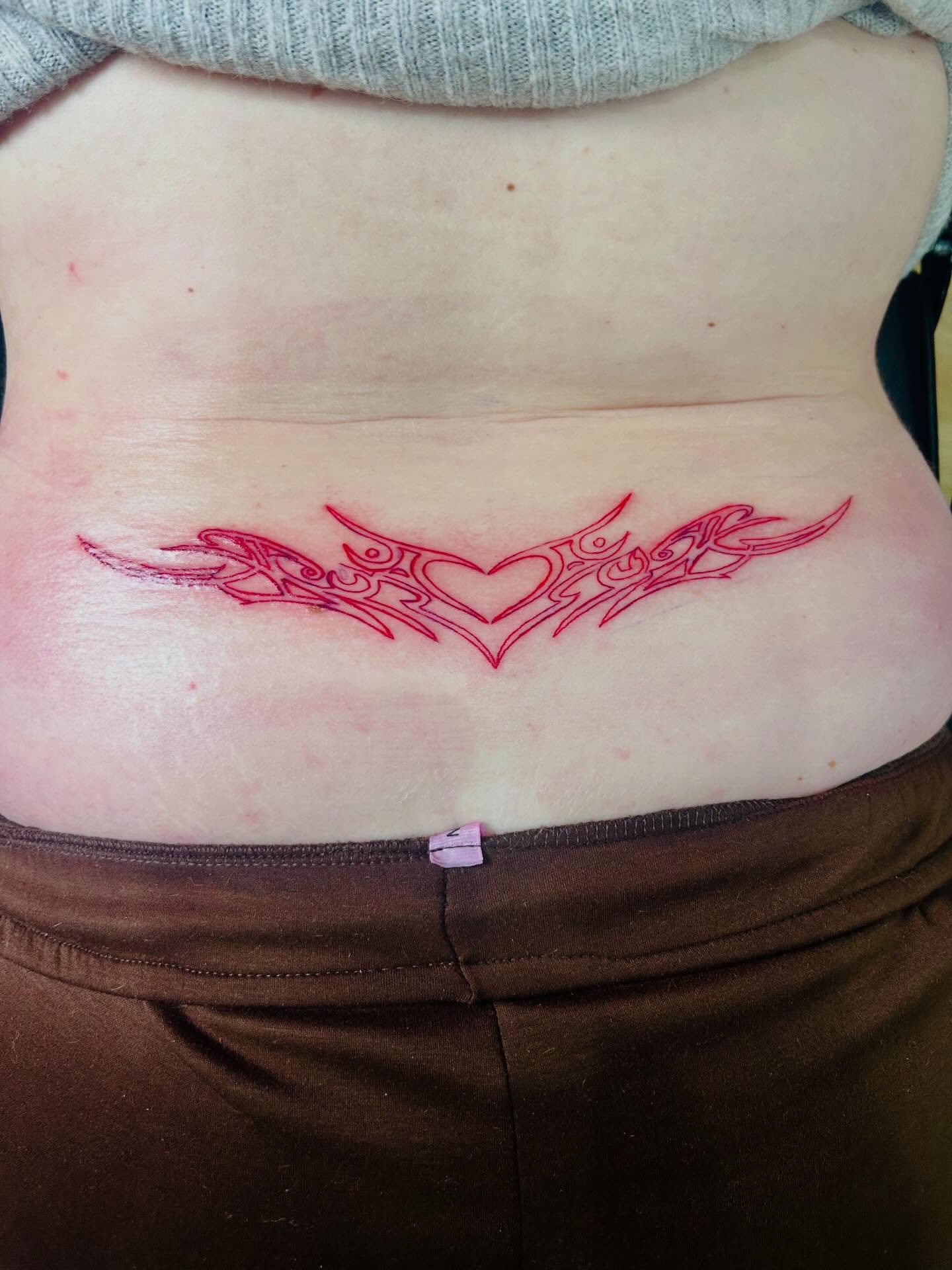
Heart Tribal Tramp Stamp
This tramp stamp tattoo features a tribal design with a heart at its center, inked in striking red. The intricate patterns symbolize strength and passion, while the heart adds a personal touch of love and emotion. Located on the lower back, it's a classic placement for this tattoo style.
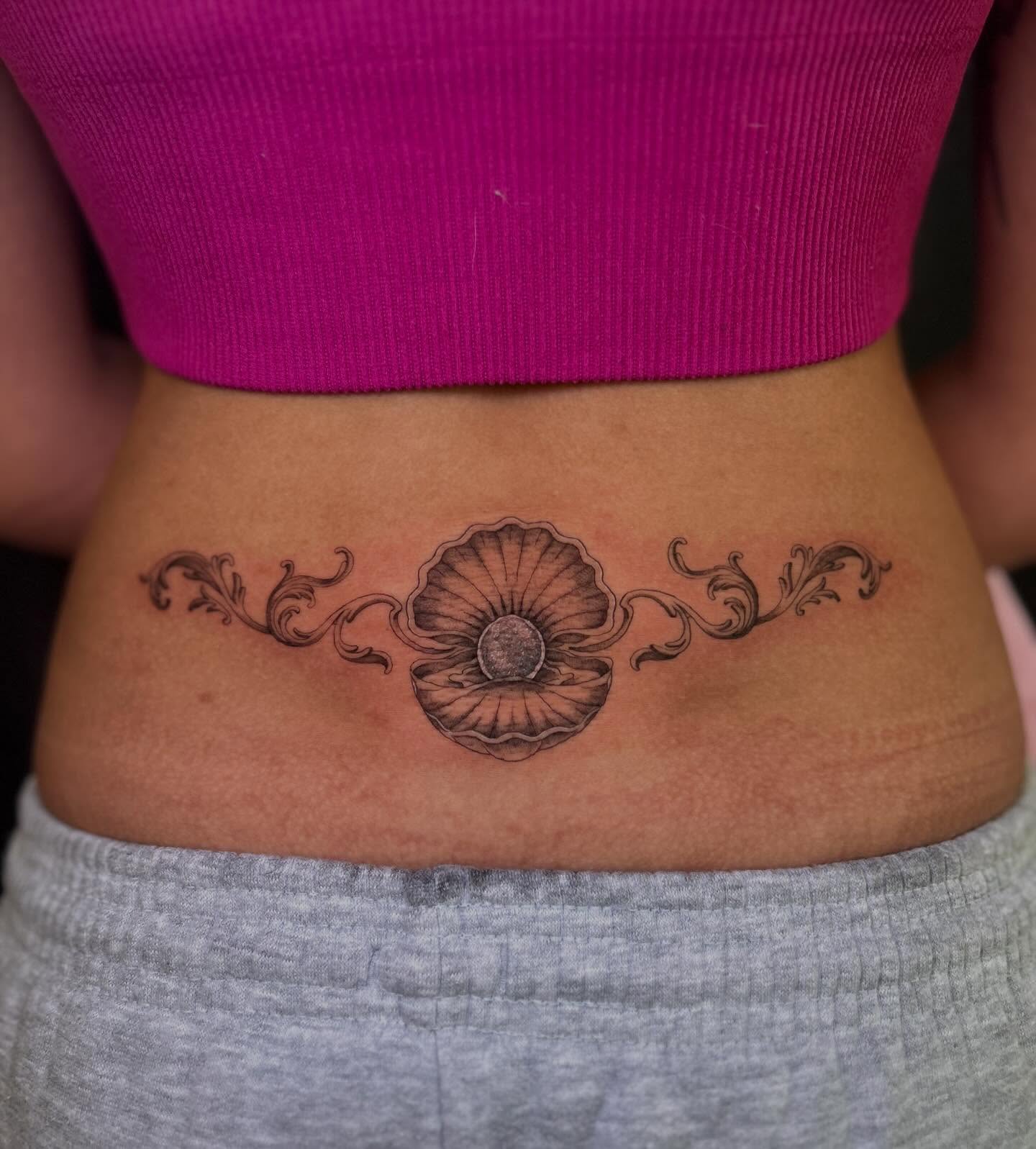
Elegant Pearl Shell Tramp Stamp
This tattoo features a delicately shaded pearl within an open shell, flanked by ornamental swirls extending horizontally. Positioned as a tramp stamp, it symbolizes beauty, femininity, and hidden treasures. The fine line work and soft shading create a graceful, timeless design at the lower back.
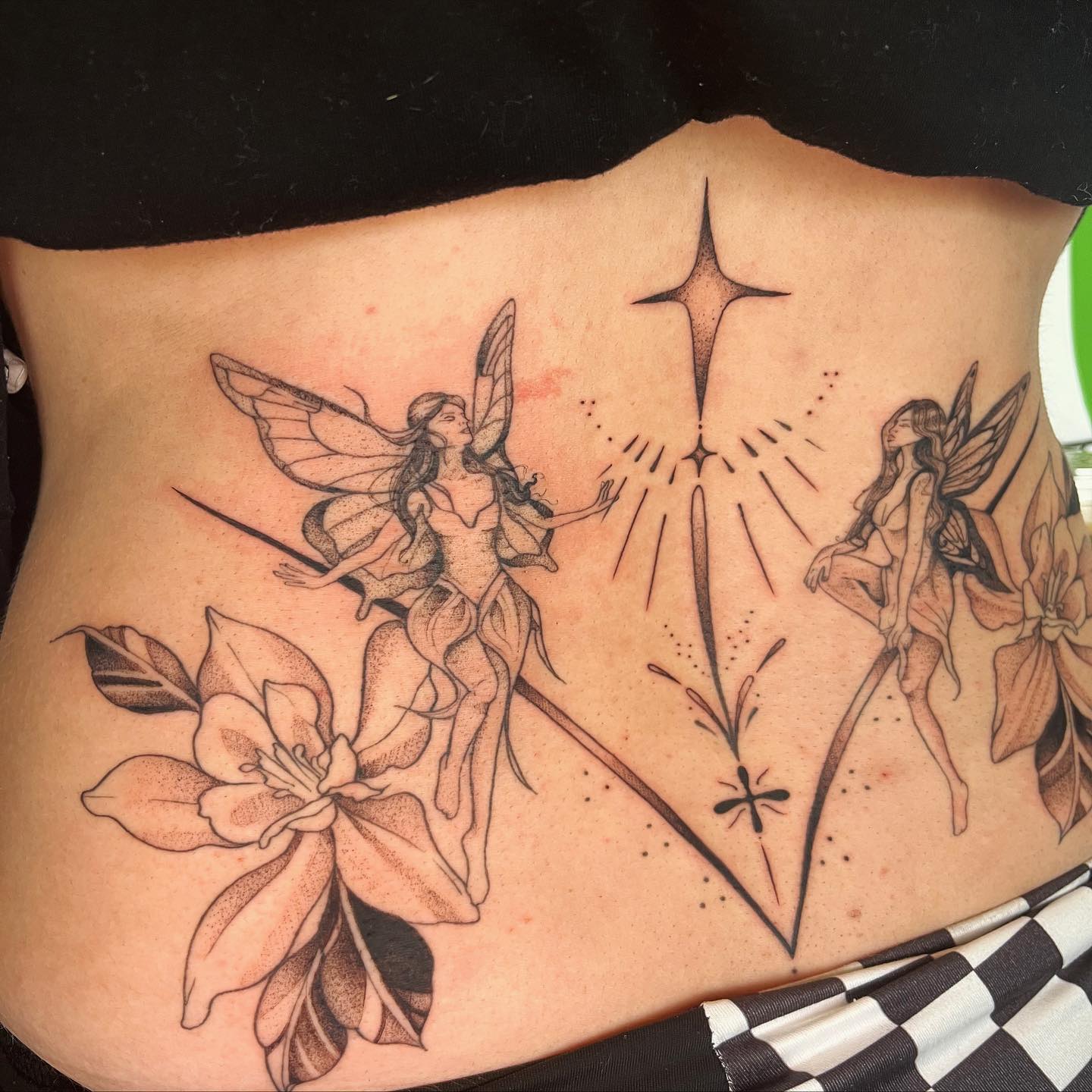
Fairy Garden Tramp Stamp
This tramp stamp tattoo features delicate fairies with butterfly wings surrounded by large blooming flowers. The design radiates a whimsical and ethereal vibe, symbolizing magic, nature, and femininity. It beautifully adorns the lower back with fine linework and dot shading.
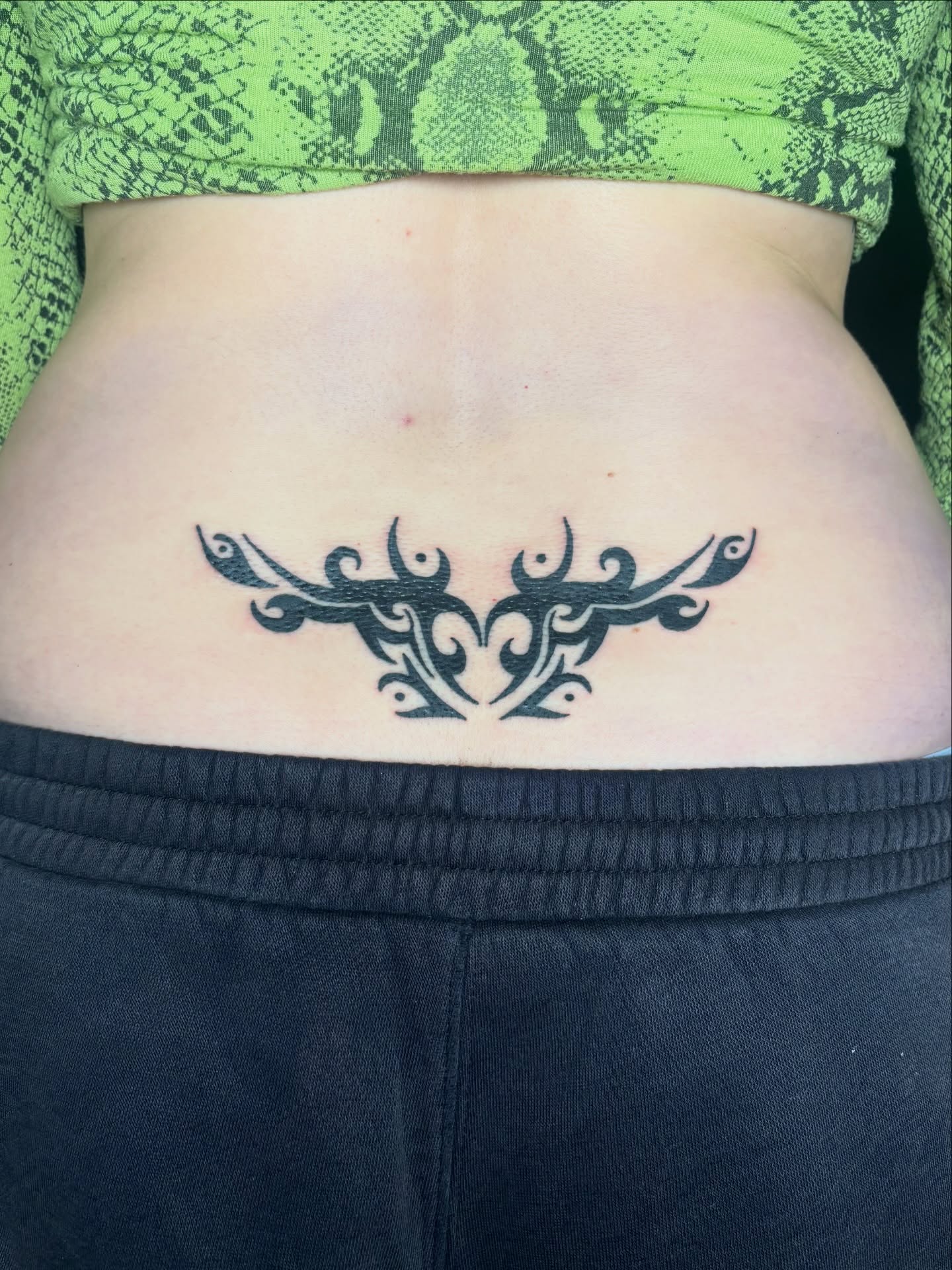
Tribal Lower Back Art
This black tribal-style tramp stamp tattoo features symmetrical swirls and points, representing a blend of strength and fluidity. Positioned on the lower back, it enhances body contours with classic bold lines common in traditional tribal tattoos.
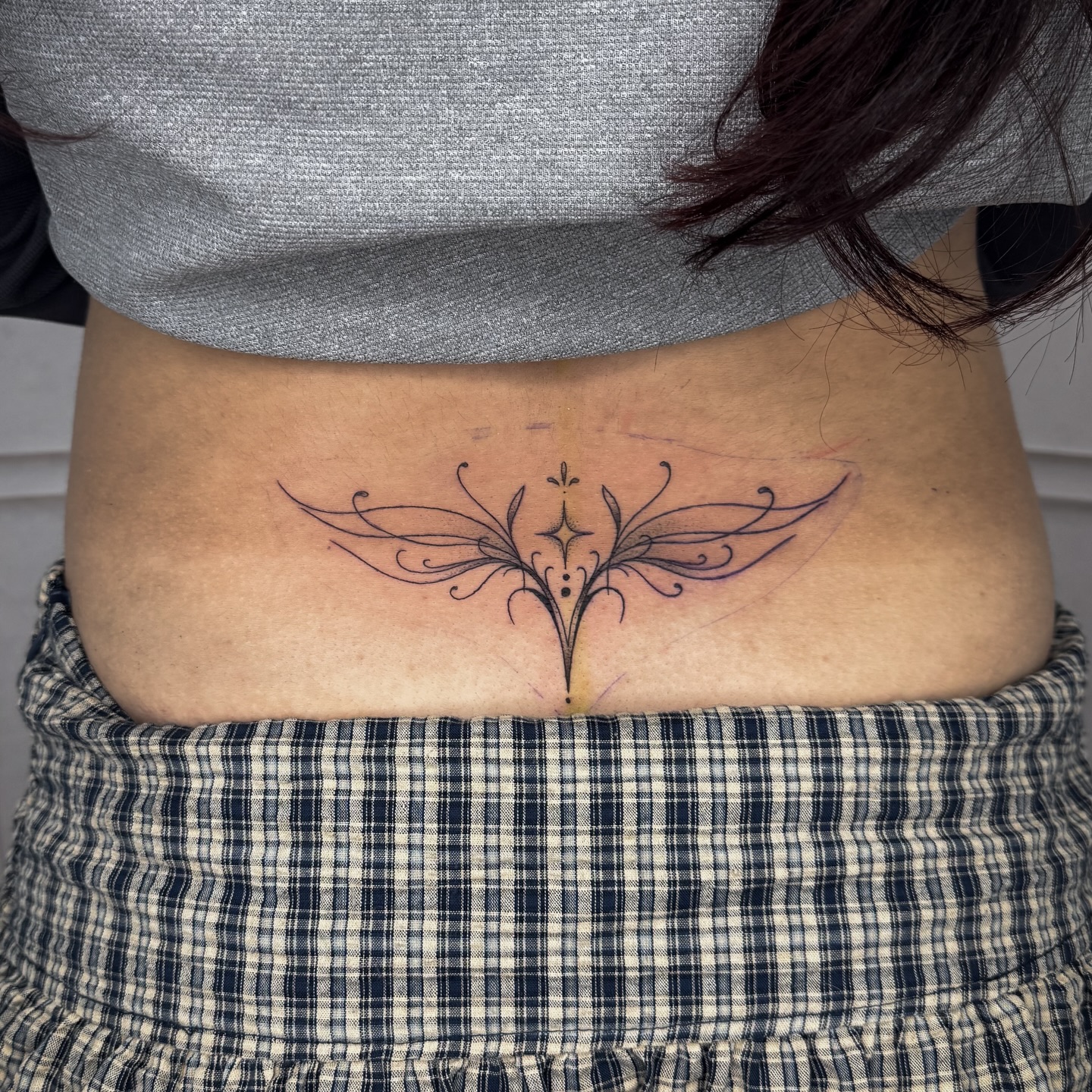
Delicate Lower Back Art
This tramp stamp tattoo features a delicate, symmetrical design with fine lines and flourishes, positioned on the lower back. The minimalistic elegance conveys femininity and subtlety, making it a tasteful and personal accent to the wearer's body.
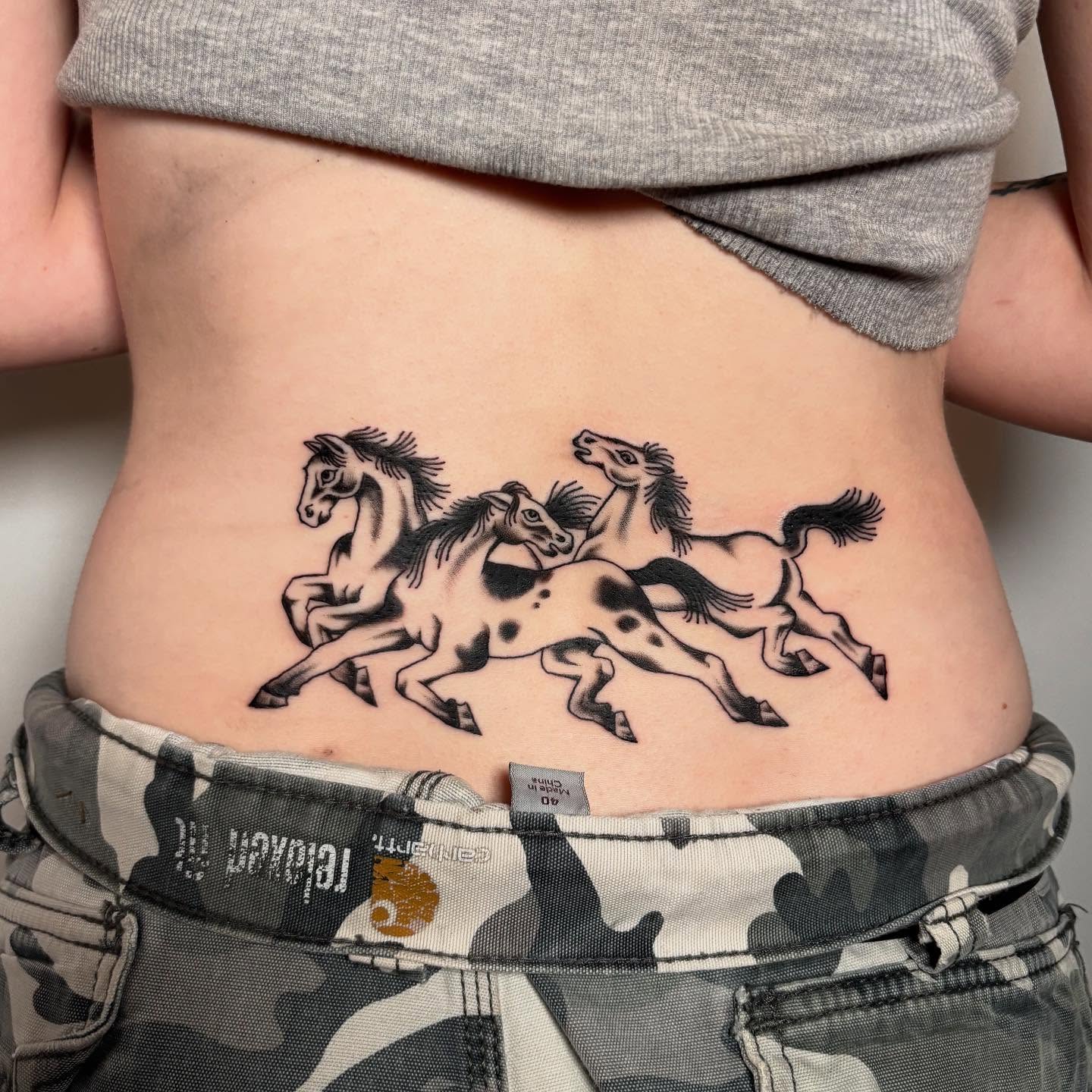
Running Horses Tramp Stamp
This tramp stamp tattoo features three galloping horses in black and grey, symbolizing freedom, strength, and spirited energy. Placed on the lower back, the design emphasizes movement and vitality with fine linework and shading.
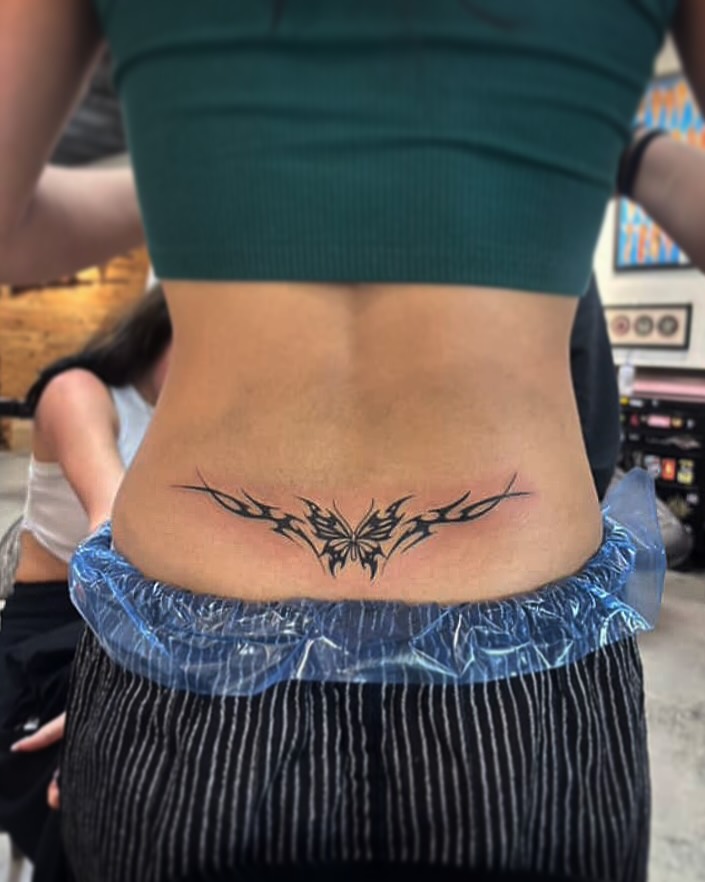
Tribal Butterfly Lowerback Tattoo
This lower back tattoo features a symmetrical tribal design with a butterfly motif at its center, symbolizing transformation and freedom. The sharp, flowing lines create a dynamic, edgy aesthetic typical of classic tramp stamp styles, enhancing the natural curves of the lower back.
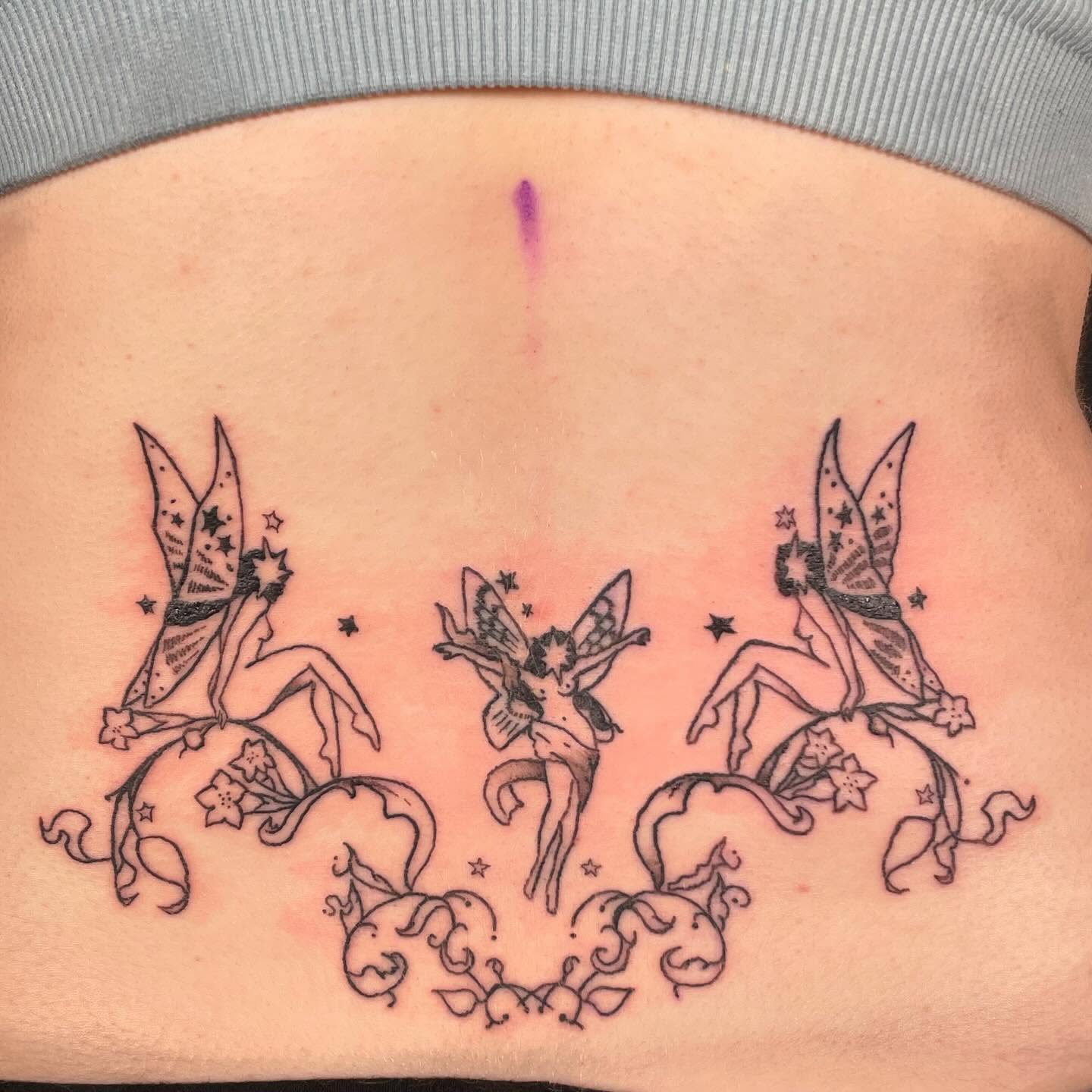
Delicate Fairy Tramp Stamp
This tramp stamp features three delicate fairies with intricate wings and flowing ribbons, surrounded by small stars. The whimsical design conveys a sense of magic and fantasy, perfect for those seeking a playful yet feminine lower back tattoo. The fine black ink lines create an elegant, ethereal look.
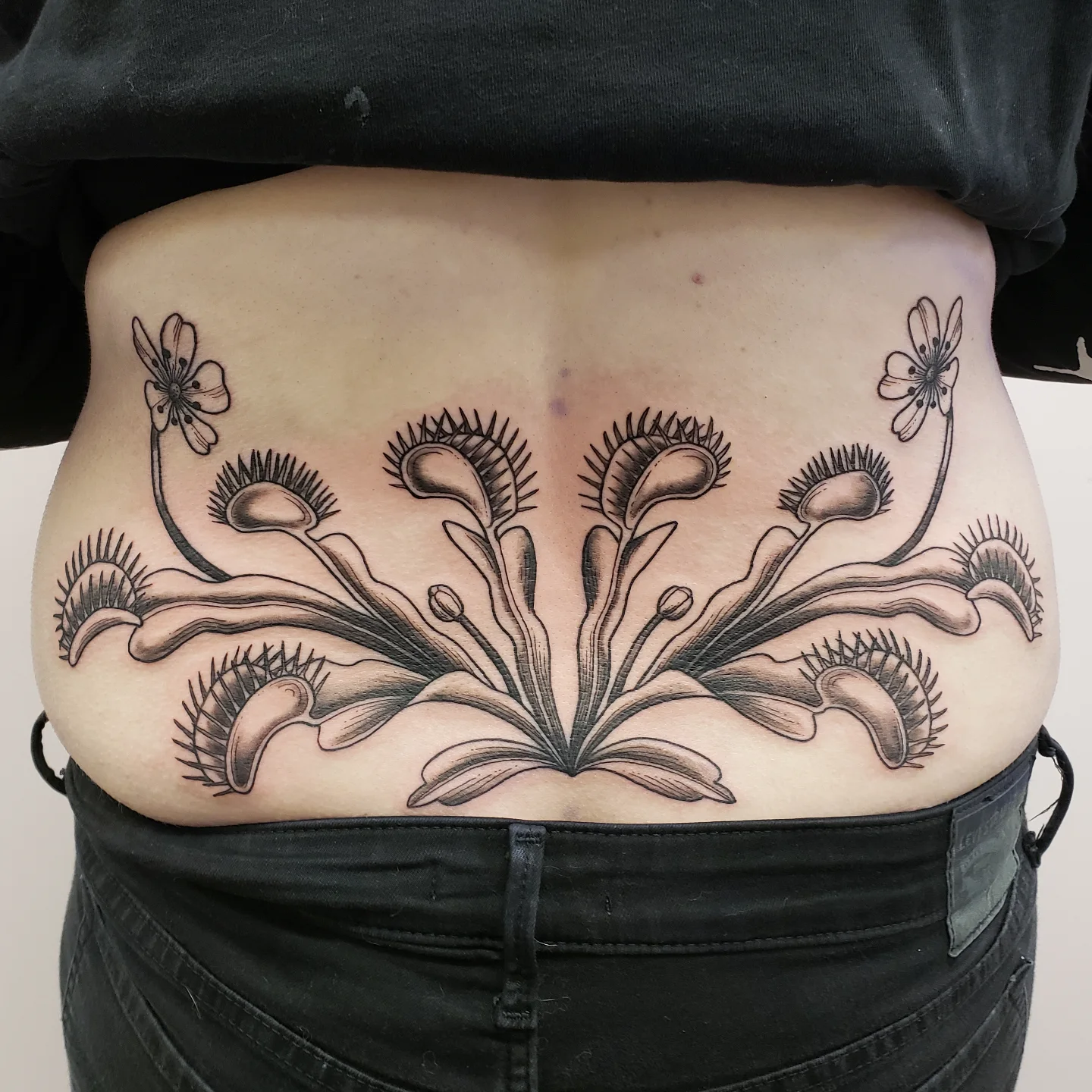
Venus Flytrap Lower Back
This tattoo features a detailed black and gray depiction of Venus flytrap plants positioned symmetrically across the lower back, a common area known as a tramp stamp location. The design blends natural botanical elements with a striking, slightly dark aesthetic symbolizing protection and allure.
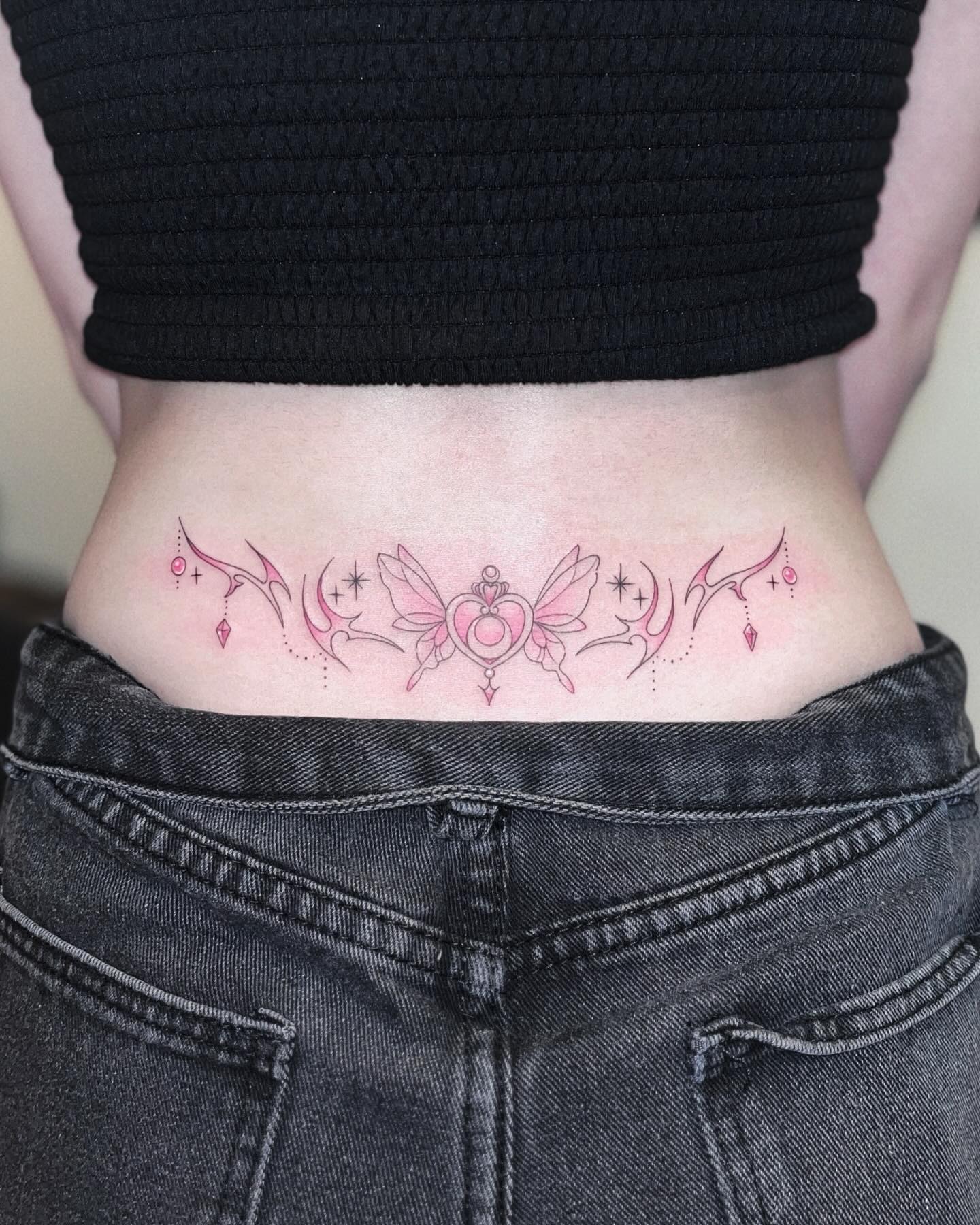
Delicate Butterfly Tramp Stamp
This lower back tattoo features a delicate butterfly with wings spread, flanked by ornamental tribal and celestial elements in soft pink and black ink. It symbolizes transformation and femininity, blending elegance with subtle mysticism in a stylish tramp stamp design.
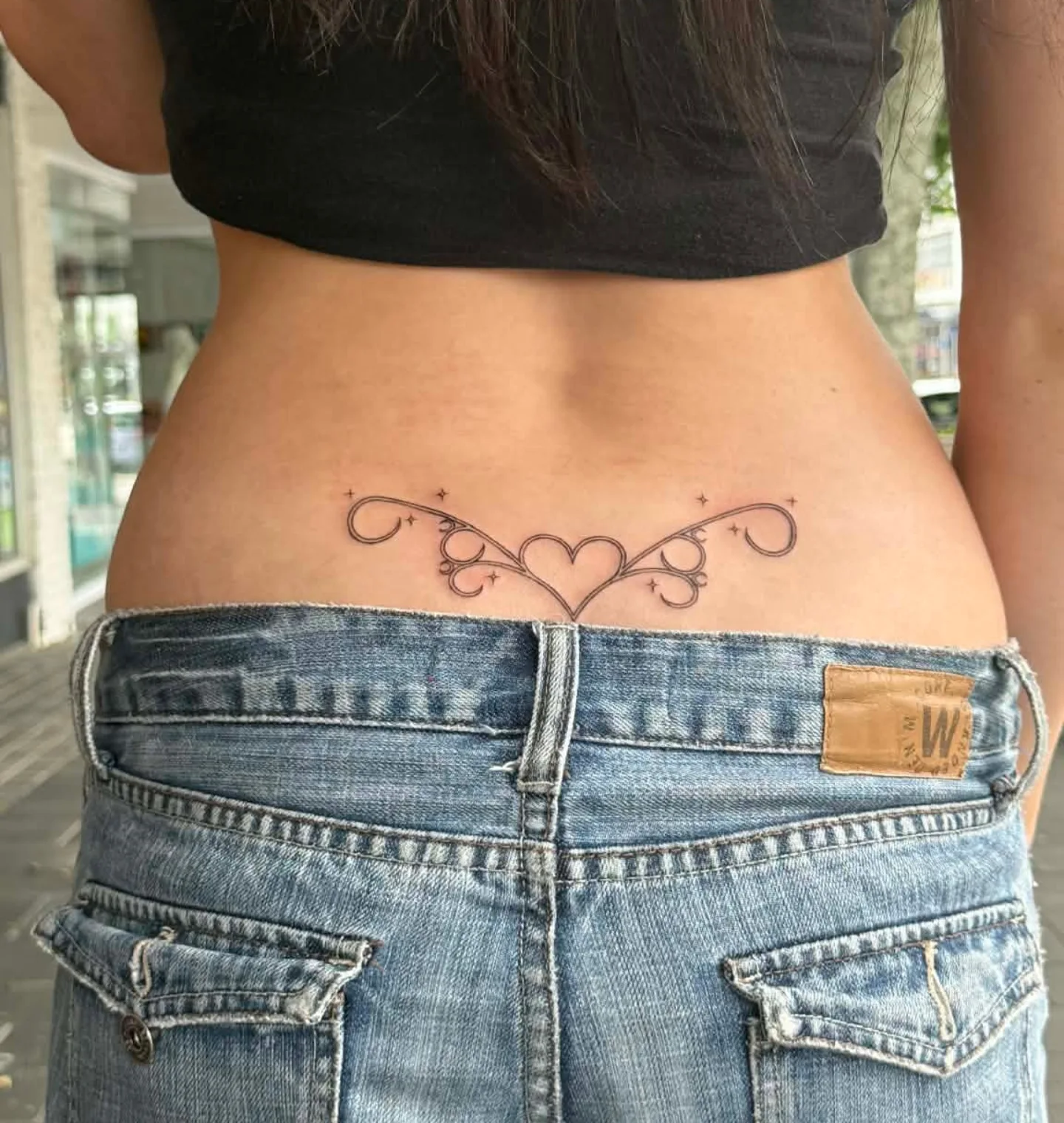
Delicate Heart Tramp Stamp
This tramp stamp features a delicate heart at its center with elegant, swirling vine-like extensions on either side, adorned with small stars. The minimalistic design adds a subtle, feminine touch, ideal for low-key body art enhancing the lower back's natural curves.
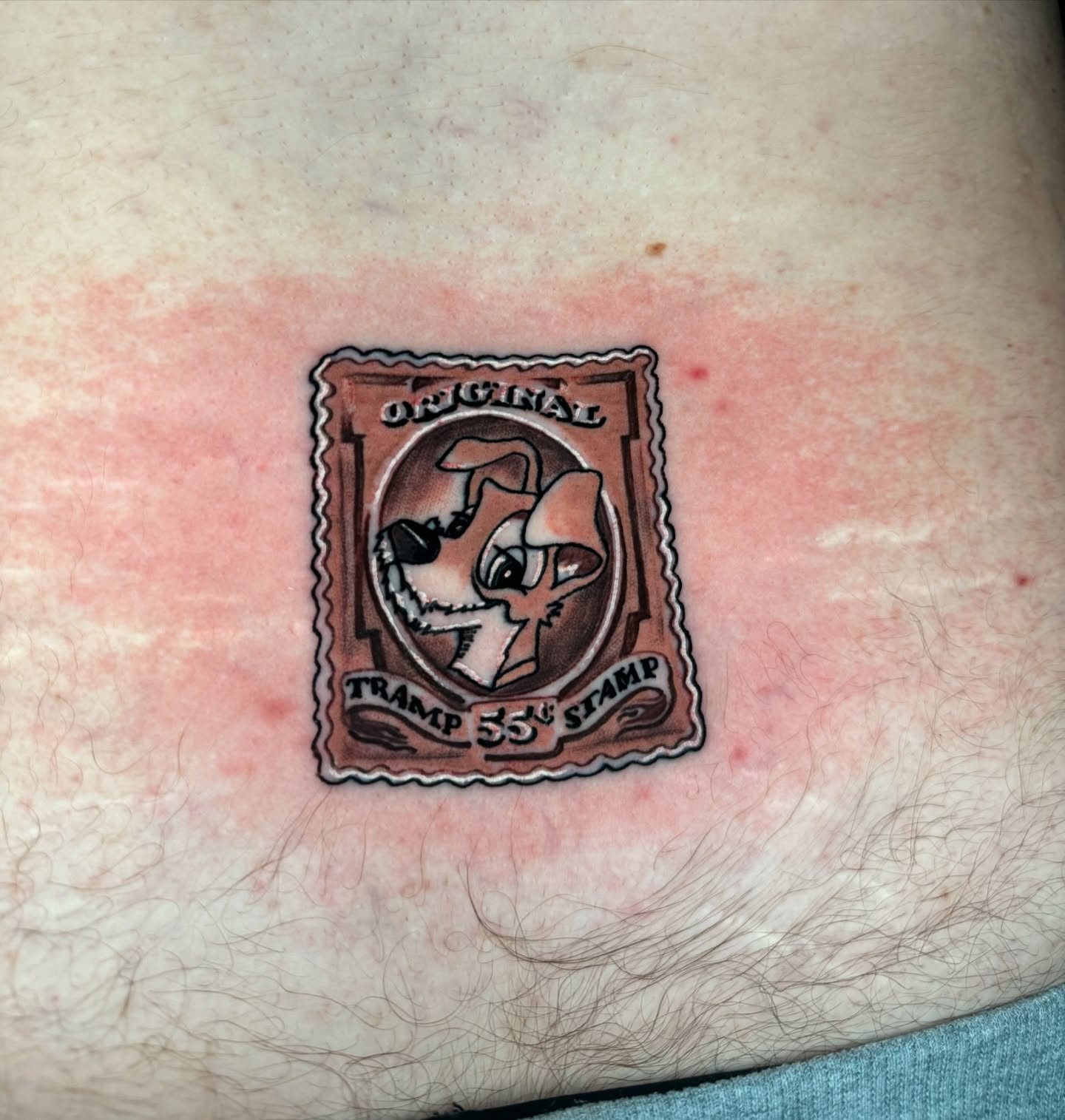
Vintage Tramp Stamp Tattoo
This tattoo mimics a vintage postage stamp featuring a playful dog character, inspired by classic animation styles. The text 'Original Tramp Stamp' humorously ties in the traditional 'tramp stamp' concept with a literal stamp design, creating a witty and nostalgic effect.
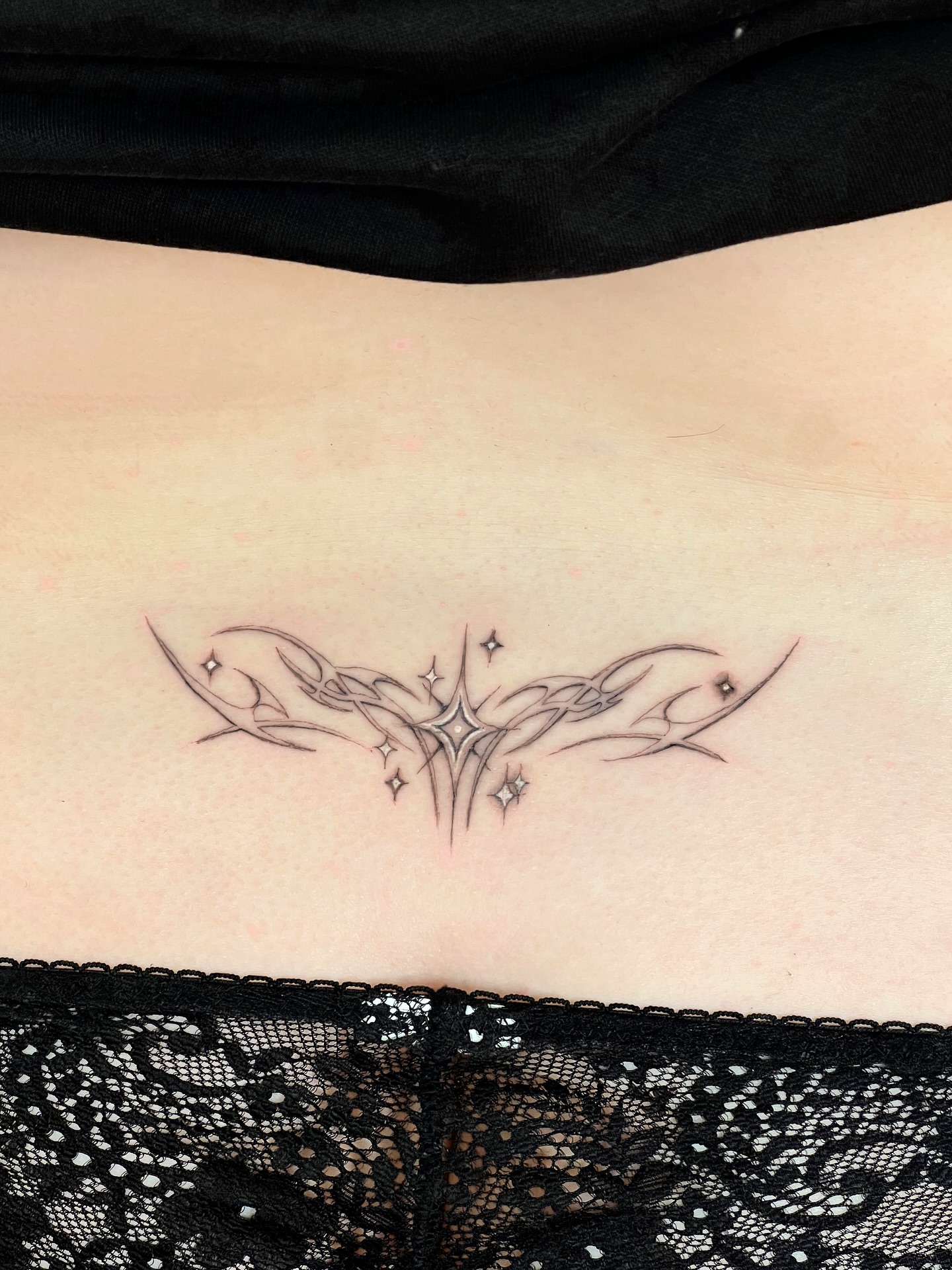
Delicate Tribal Tramp Stamp
This tattoo features a delicate and finely detailed tribal design with symmetrical curves and subtle shading. It is placed centrally on the lower back, typical of a tramp stamp style. The light lines and star-like highlights add a refined and elegant touch, combining traditional tribal elements with a modern delicate aesthetic.
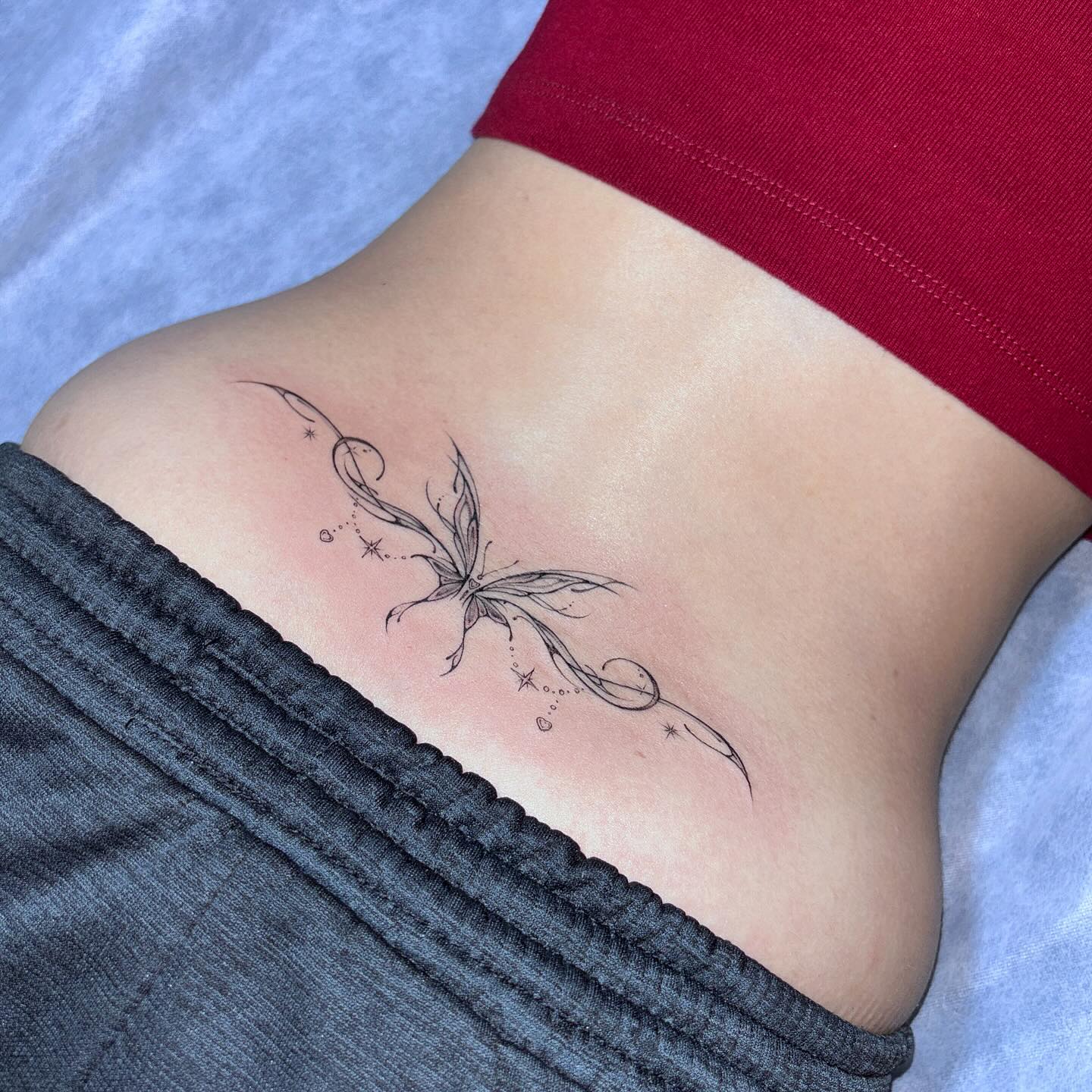
Delicate Butterfly Tramp Stamp
This tramp stamp features a finely detailed butterfly with grace and lightness, symbolizing transformation and freedom. The delicate swirls and tiny stars add an ethereal, whimsical quality, enhancing the femininity and elegance of the lower back tattoo design.
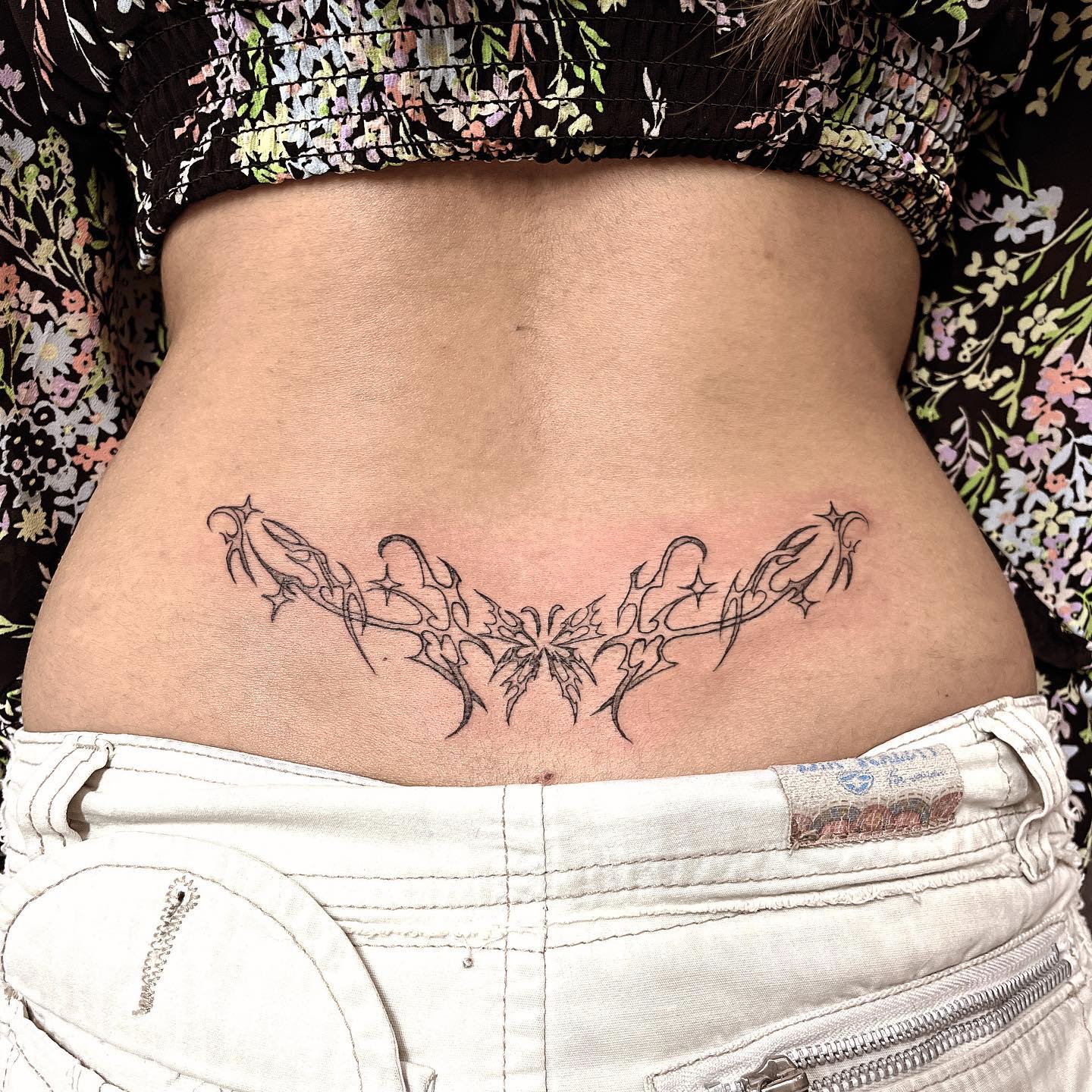
Symmetrical Tribal Tramp Stamp
This tramp stamp tattoo features a symmetrical tribal design with flowing, sharp lines that evoke a sense of movement and intensity. Centered on the lower back, it beautifully complements the body's natural contours, making a bold yet elegant statement typical of classic tribal motifs.
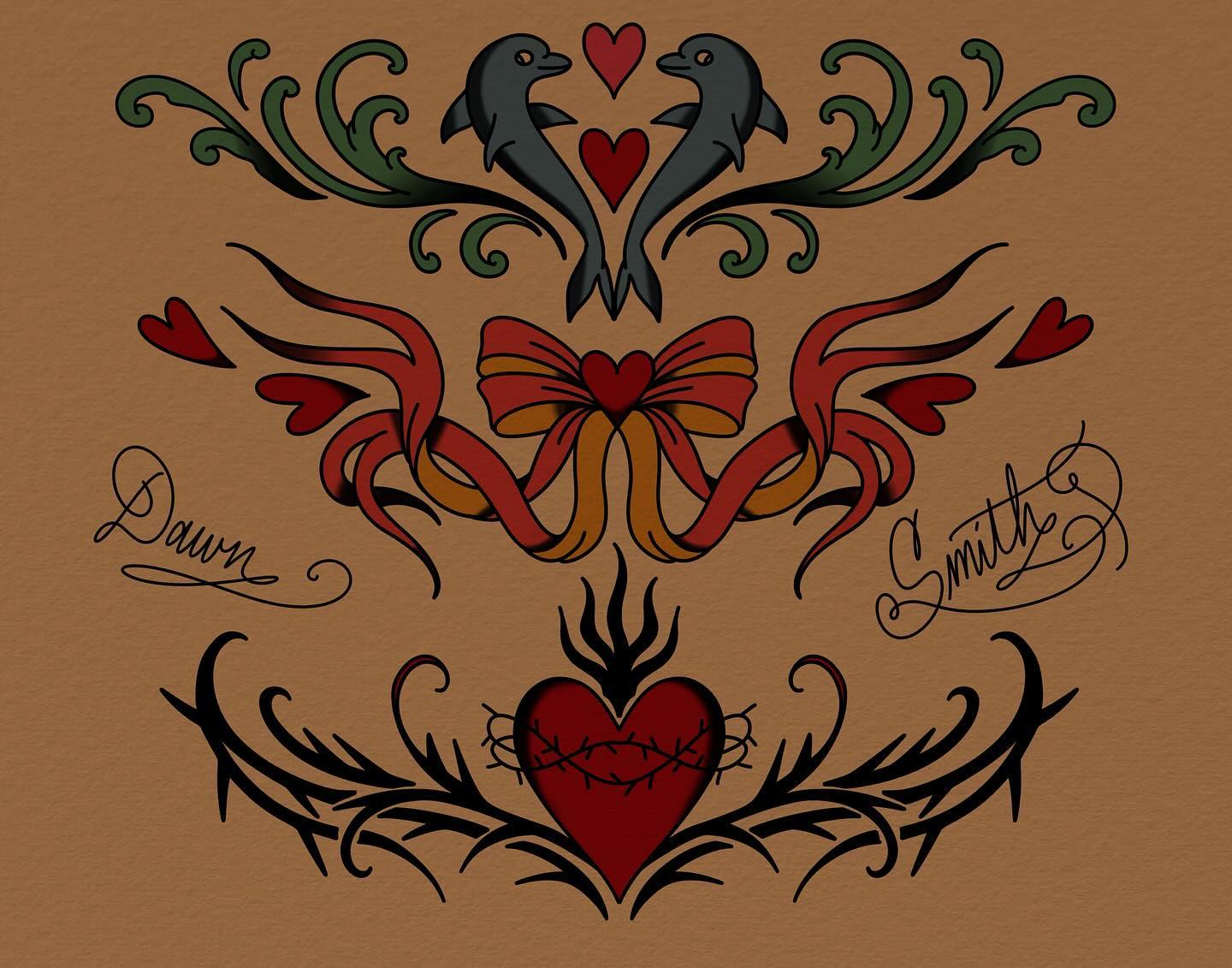
Classic Tramp Stamp Set
This collection features classic tramp stamp motifs like hearts, ribbons, dolphins, and tribal swirls. The design blends love symbolism with traditional tattoo aesthetics, suitable for lower back placement. Names add a personalized touch, enhancing sentimental value.
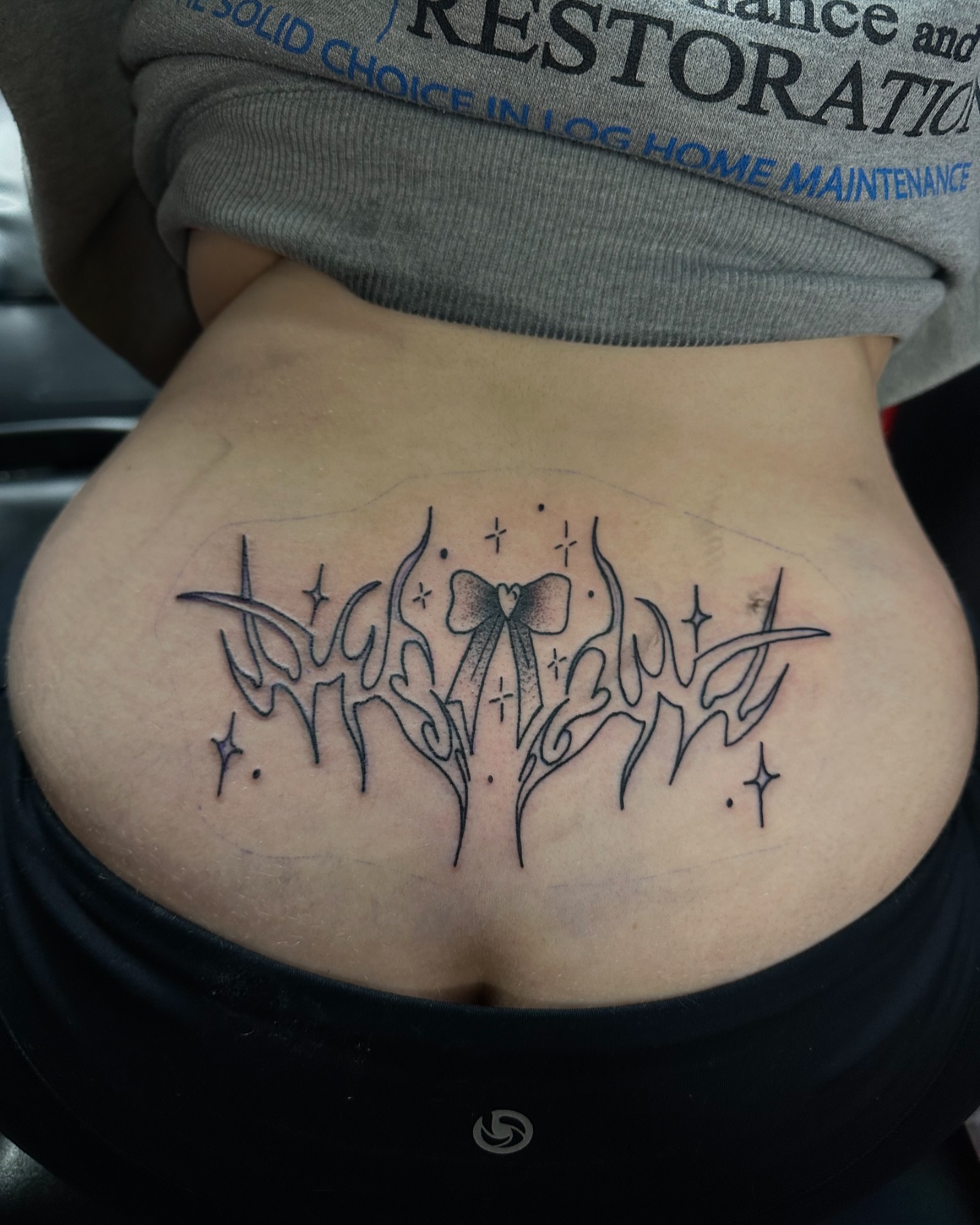
Tribal Lower Back Bow
This tramp stamp tattoo features a tribal-inspired design with a central bow symbolizing femininity and charm. The tribal patterns add a bold and edgy aesthetic that contrasts with the delicate bow, enhanced by small sparkles that bring a touch of whimsy and light to the overall design.
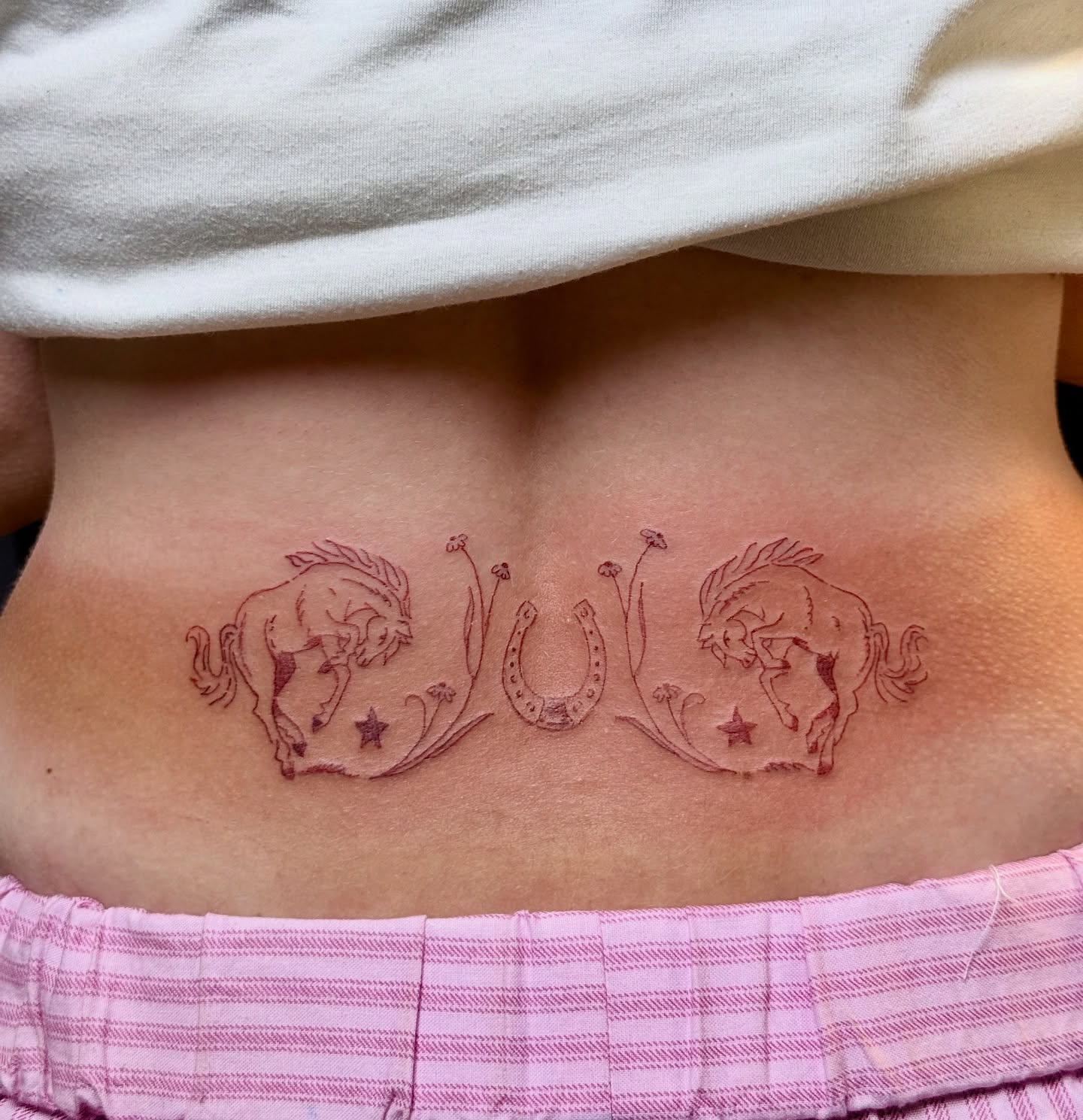
Horse and Horseshoe Tramp Stamp
This delicate tramp stamp tattoo features two detailed galloping horses facing a horseshoe in the center, accented by floral elements and stars. The design symbolizes strength, freedom, and good luck, artistically placed along the lower back for a traditional yet elegant look.
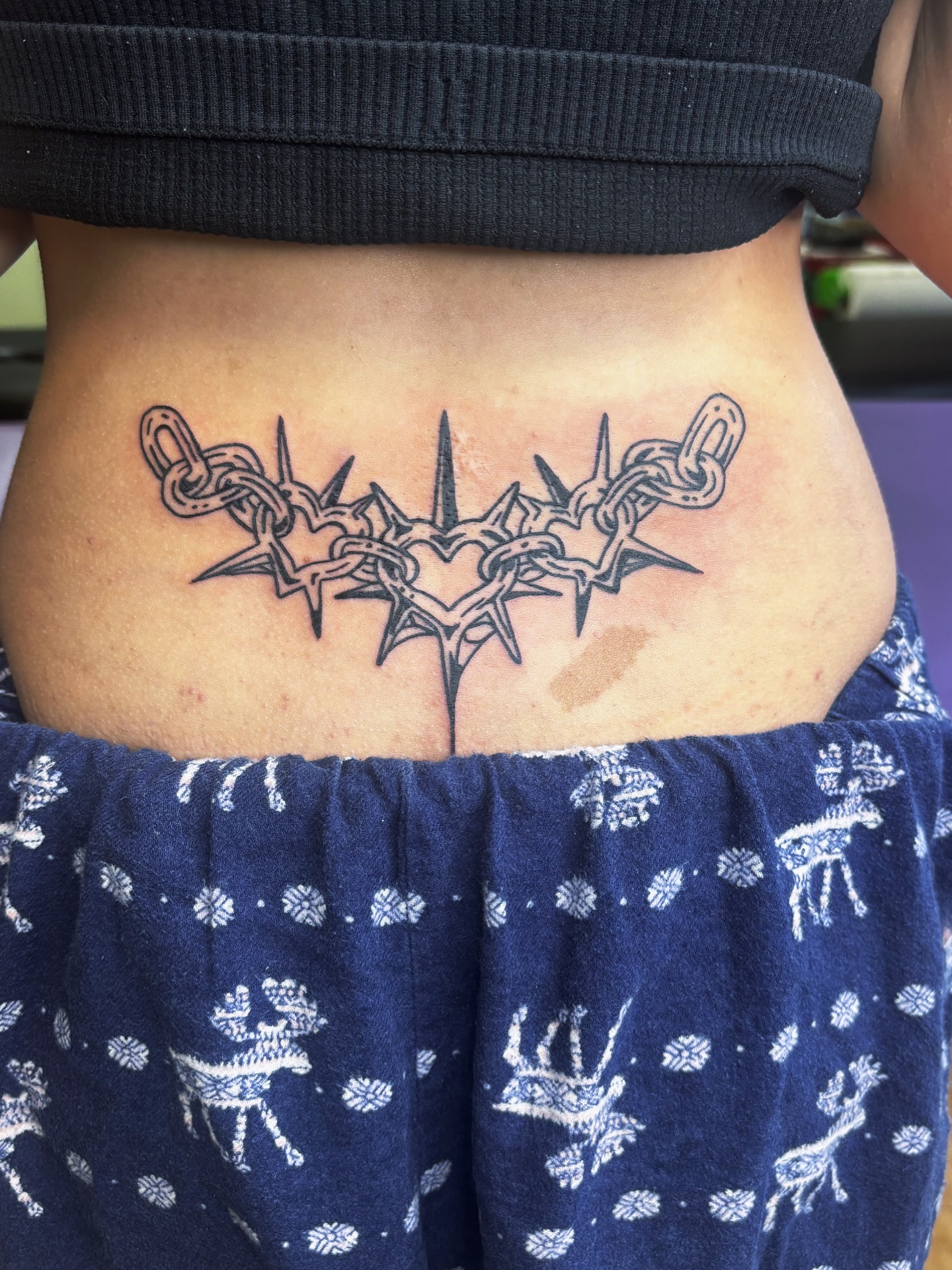
Tribal Chain Tramp Stamp
This tramp stamp tattoo features a bold black ink design resembling a linked chain with tribal-style spikes and pointed edges, symbolizing strength and resilience. Positioned on the lower back, it embraces the classic placement of a tramp stamp, combining edgy aesthetics with personal symbolism.
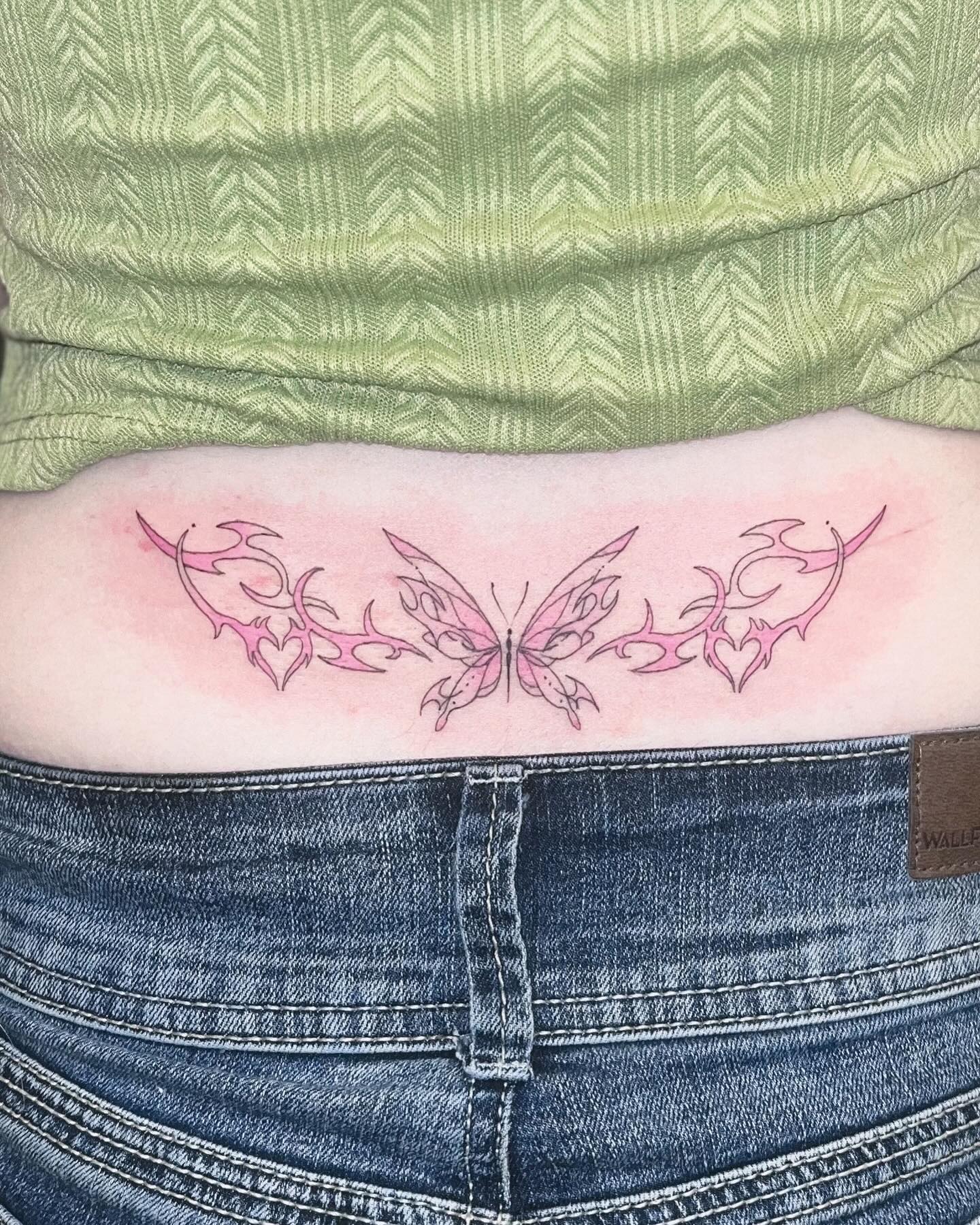
Delicate Butterfly Tramp Stamp
This lower back tattoo features a delicate butterfly at its center, flanked by tribal flame designs tinted with subtle pink shading. It symbolizes transformation and freedom while embracing the classic tramp stamp placement with a modern, feminine twist.
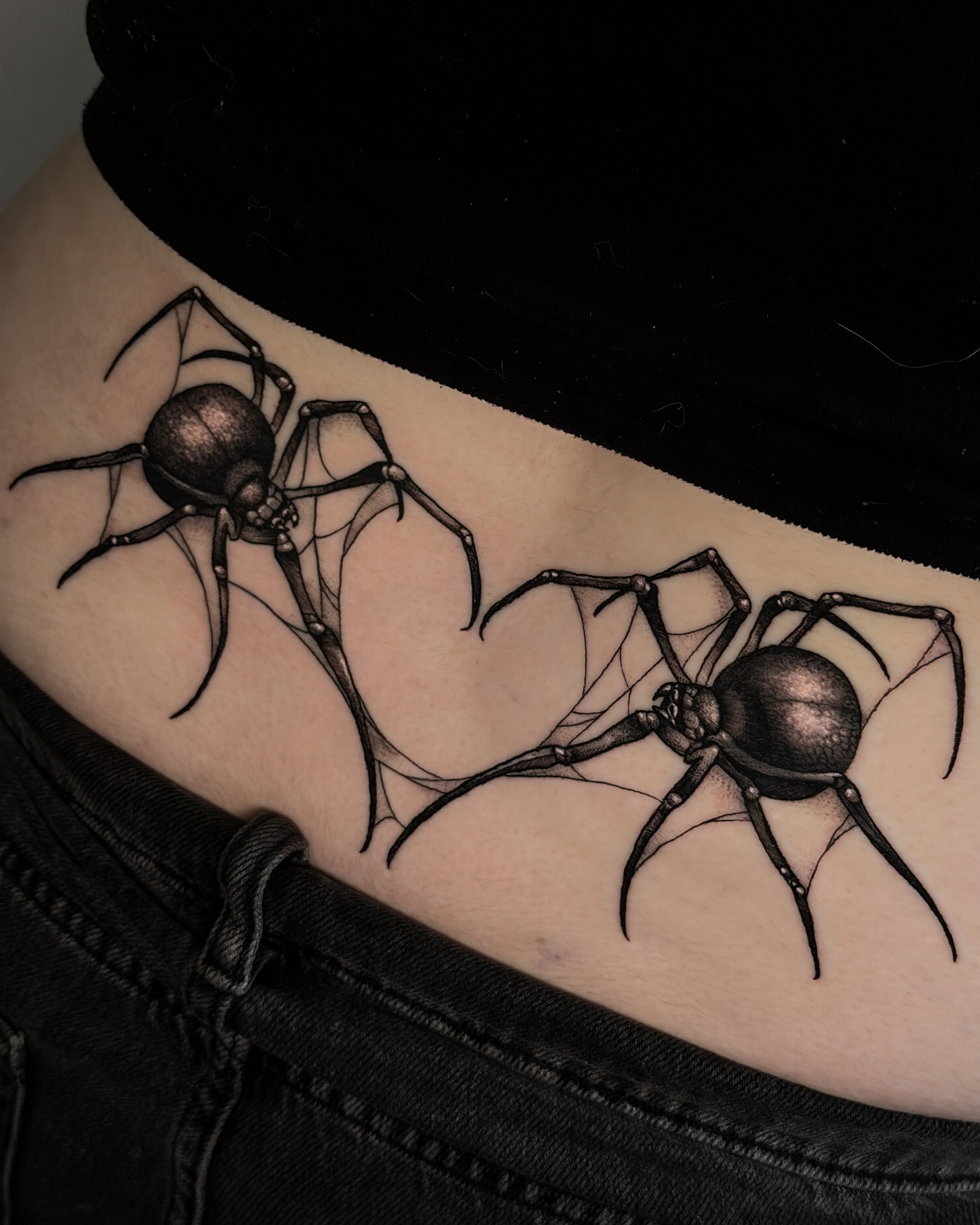
Spider Web Tramp Stamp
This tramp stamp tattoo features two realistic black widow spiders connected by delicate webs, symbolizing danger and mystery. The intricate shading highlights their glossy bodies, creating a striking low back tattoo with a dark aesthetic. It suits those looking for bold insect imagery down the spine.
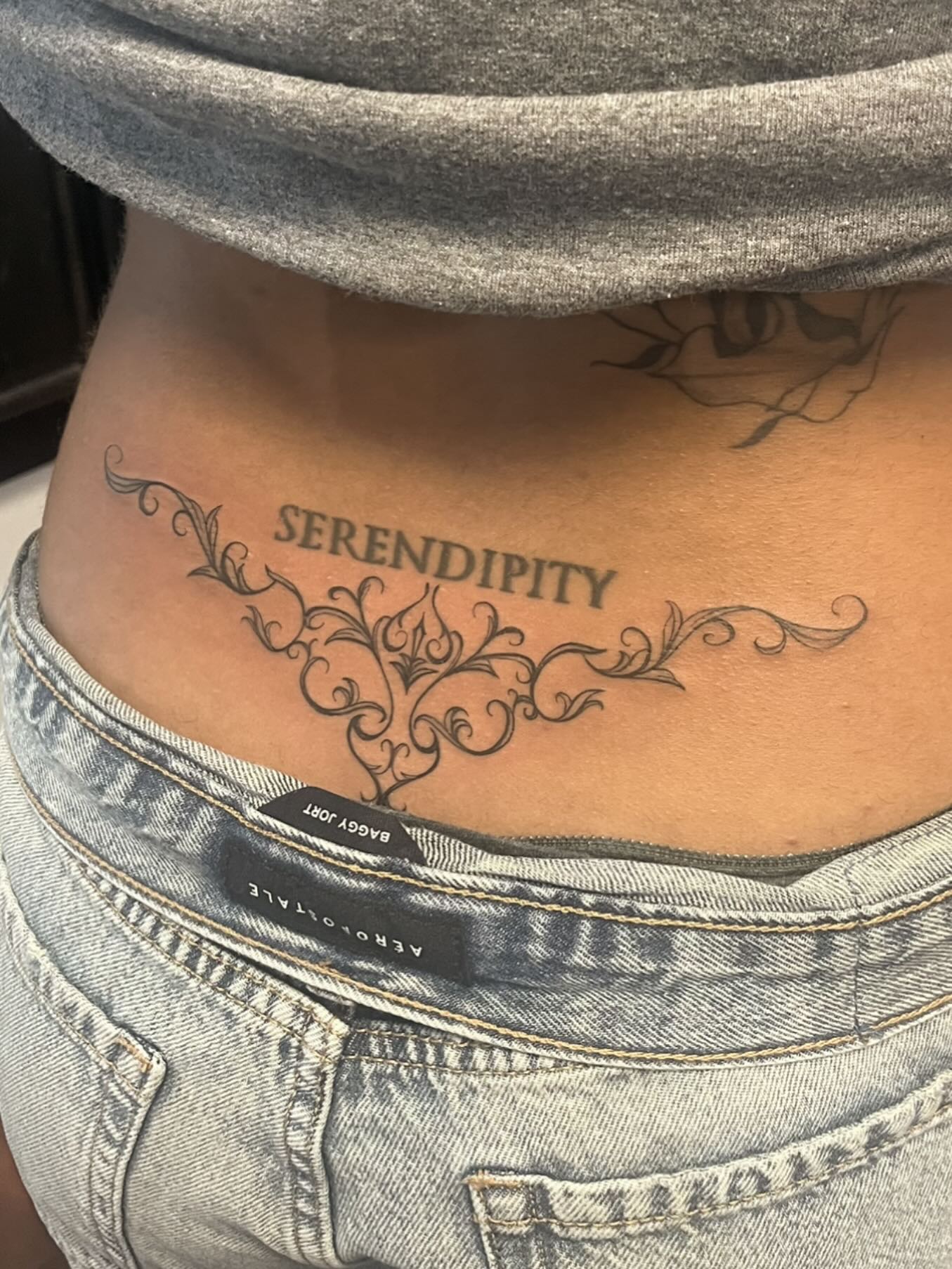
Serendipity Lower Back
This tramp stamp tattoo features the word 'SERENDIPITY' in bold uppercase letters, complemented by an elegant ornamental flourish below it. The design balances simplicity with artistic flair, symbolizing unexpected happy discoveries and good fortune. Its placement on the lower back highlights its classic tramp stamp style with a refined aesthetic.
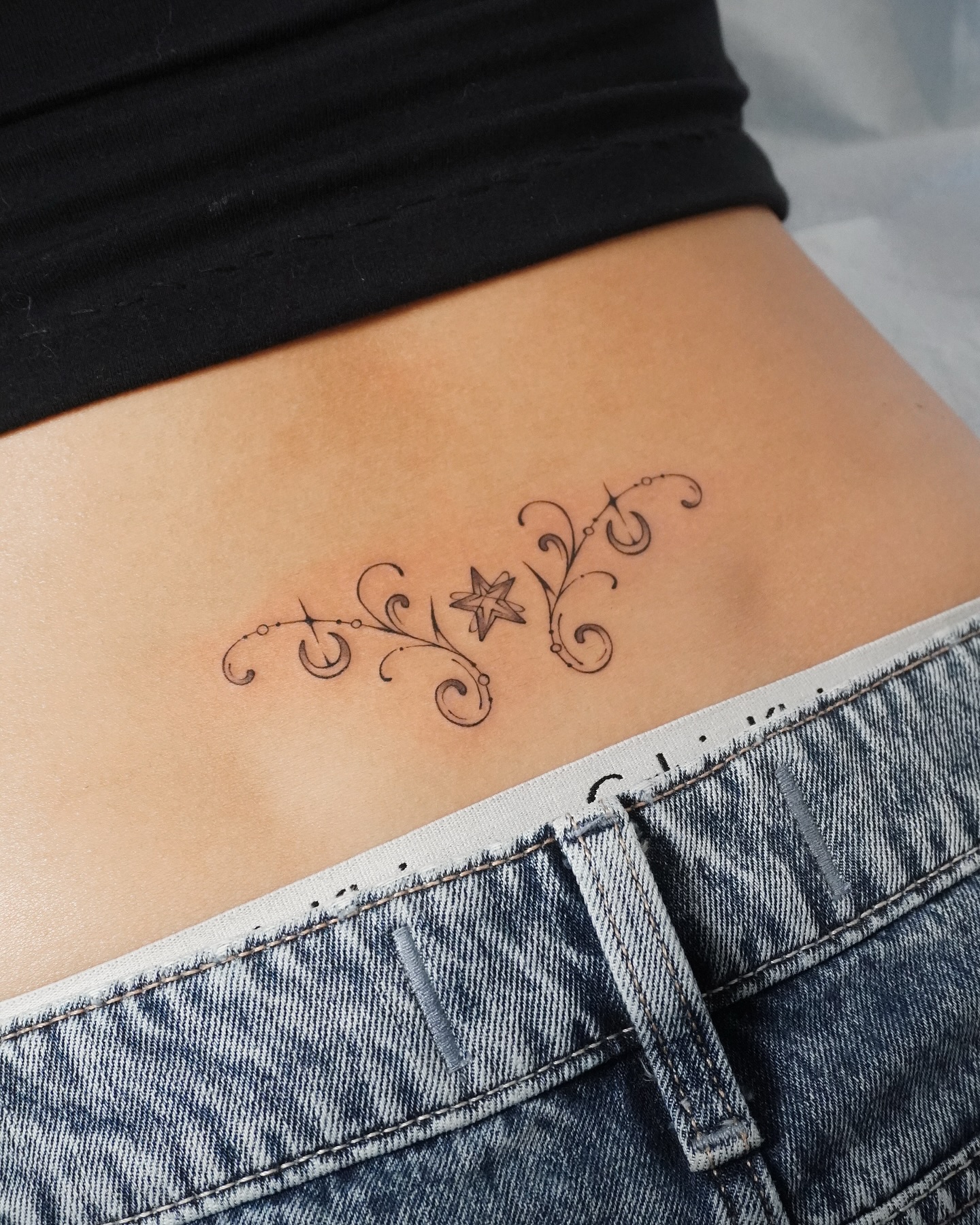
Delicate Lower Back Design
This delicate lower back tattoo, commonly known as a tramp stamp, features a central star with ornamental swirling lines and small dot accents. The fine line work and symmetrical design add elegance and personal symbolism, often representing guidance, protection, or beauty.
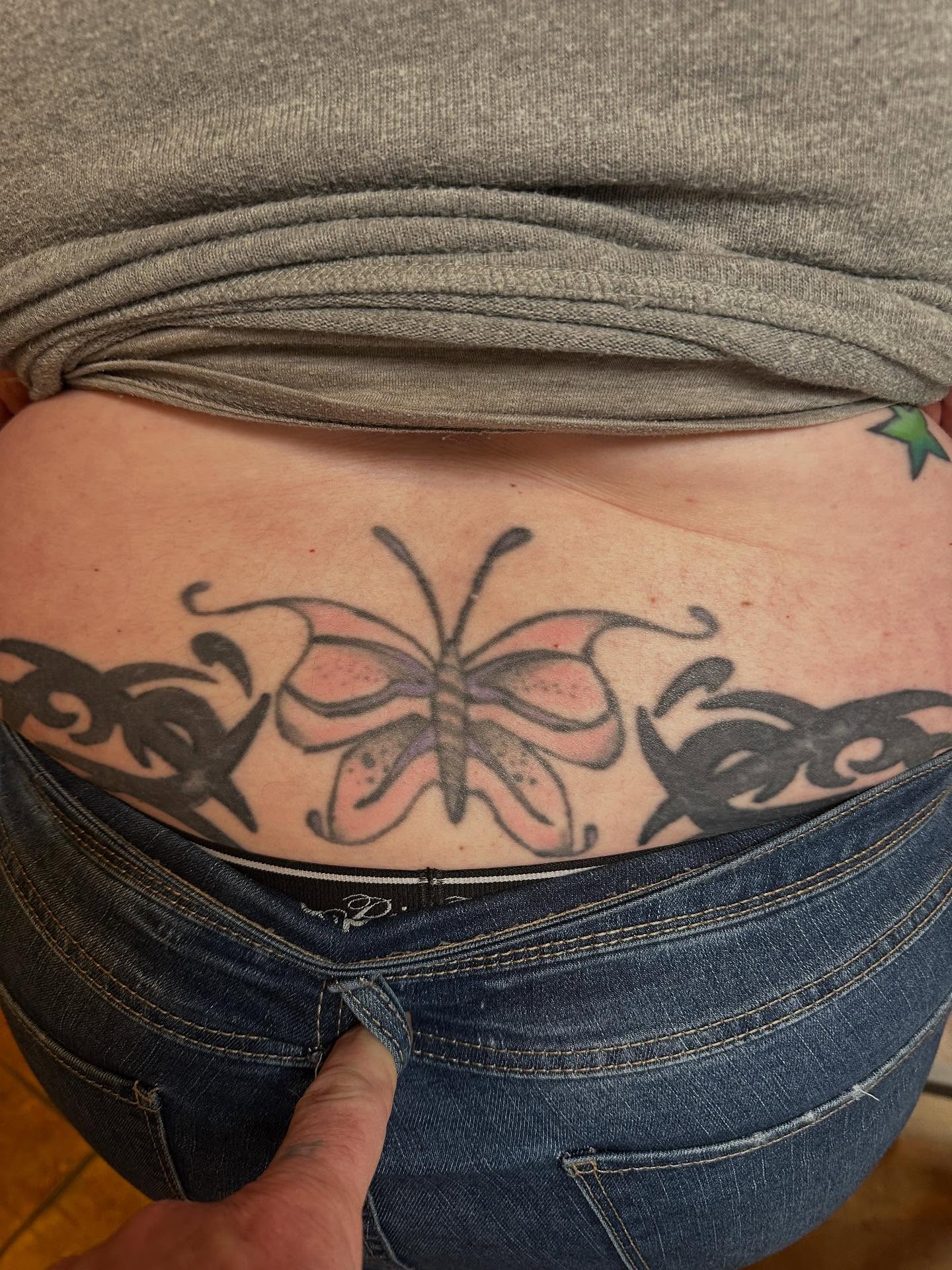
Butterfly with Tribal Bands
This tramp stamp tattoo features a central butterfly with soft pink and purple hues, flanked by bold black tribal bands extending horizontally. The butterfly symbolizes transformation and freedom, while the tribal elements add a contrasting strong aesthetic. This design balances delicate artistry and bold linework typical of lower back tattoos.
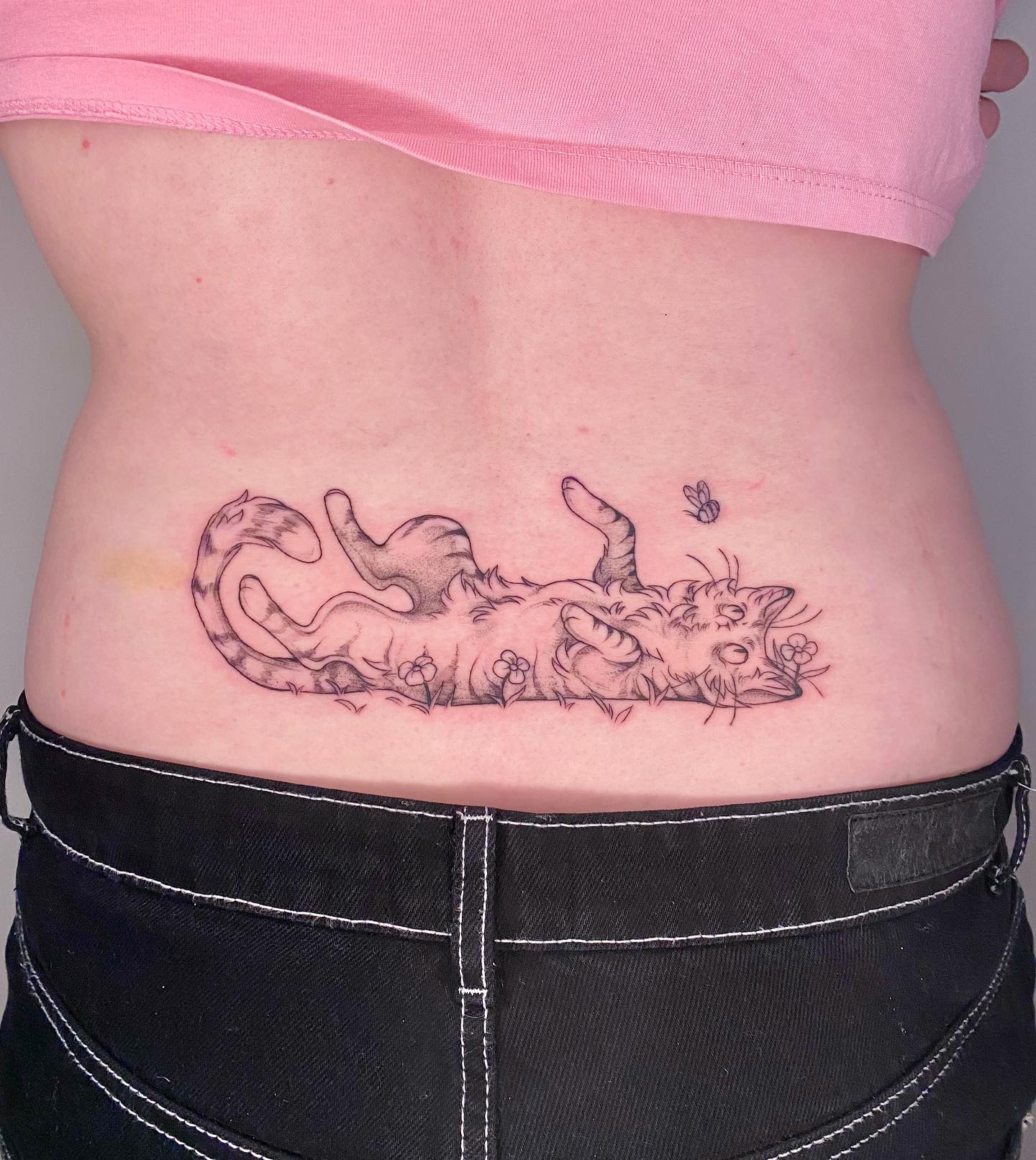
Playful Cat Lower Back Tattoo
This tramp stamp tattoo features a playful cat lying on its back amidst small flowers and a buzzing bee, rendered in delicate linework and subtle shading. The design conveys a sense of lightheartedness and charm, making it a whimsical and unique lower back piece.
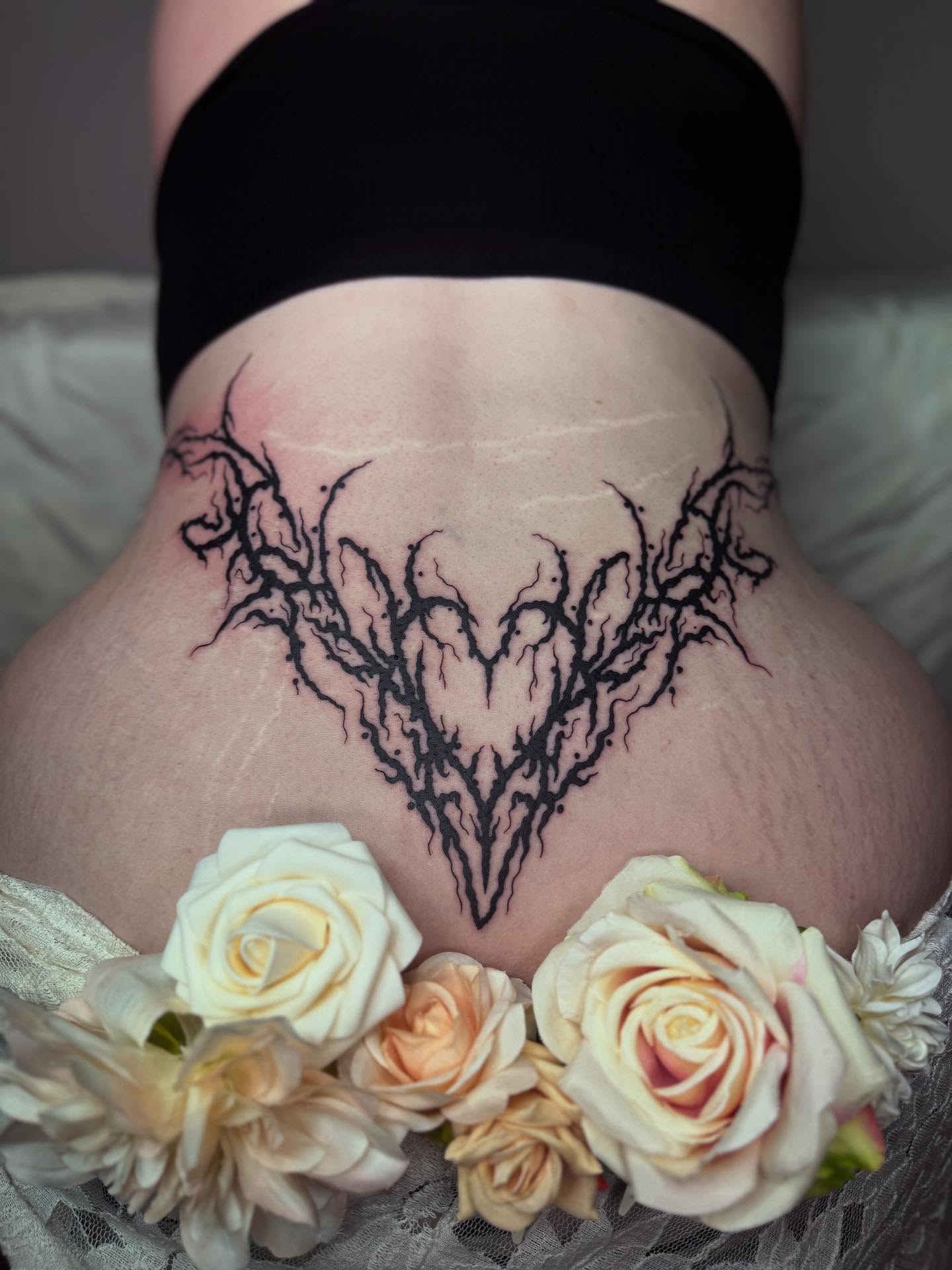
Abstract Tribal Lower Back
This black ink tramp stamp tattoo features an abstract tribal design with sharp, jagged lines forming a symmetrical V-shape on the lower back. The design's intense, lightning-like elements evoke power and mystique, complementing the natural curves of the body with bold visual impact.
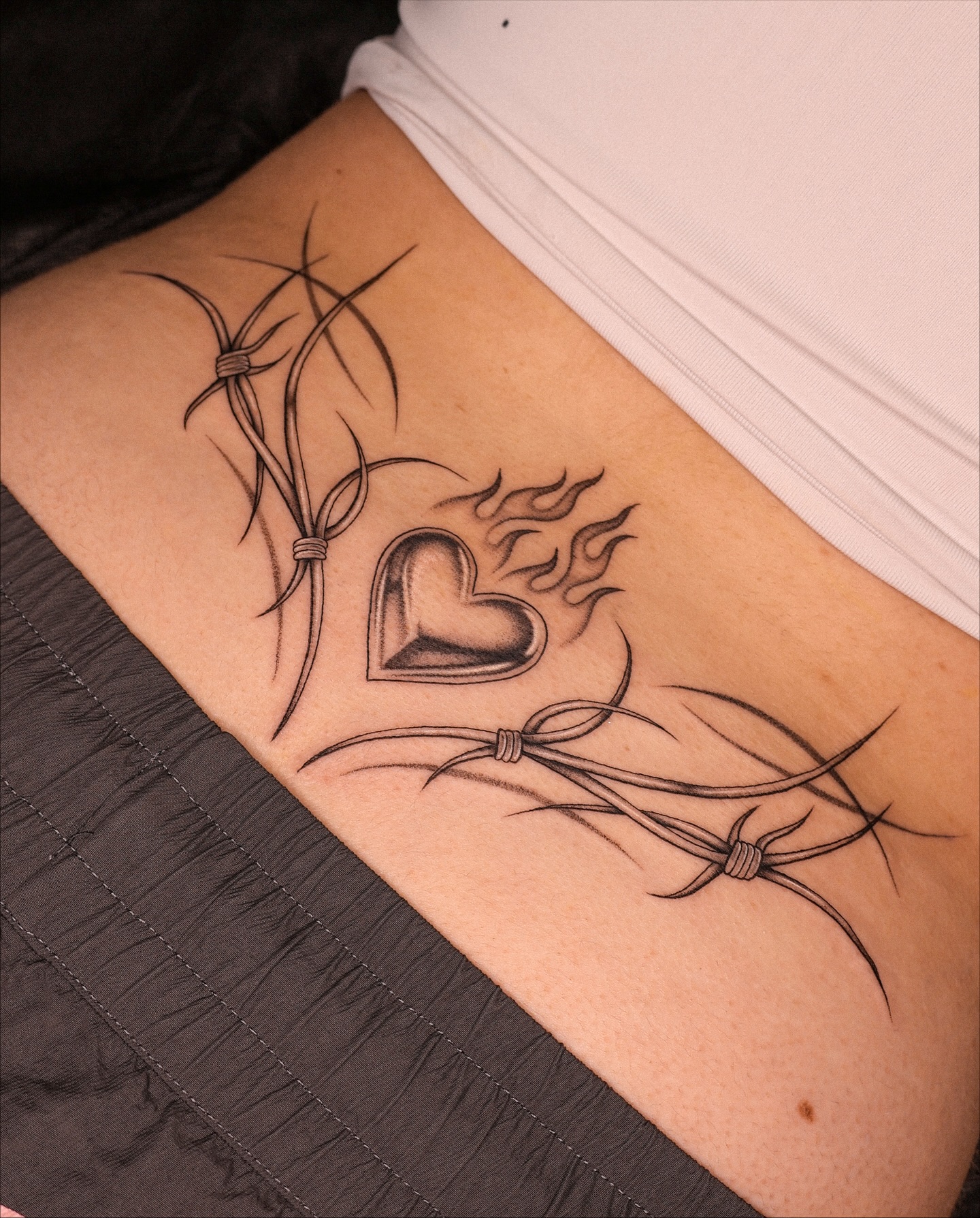
Flaming Heart Tramp Stamp
This tramp stamp tattoo features a central flaming heart surrounded by elegant barbed wire, symbolizing love's intensity and resilience. Its clean black and grey shading adds depth and a striking contrast, making it a distinct and bold lower back design.
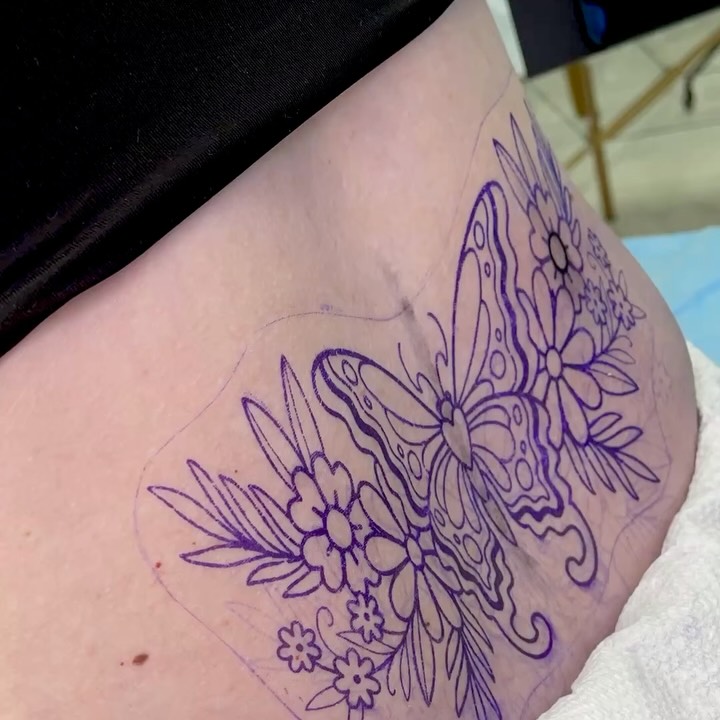
Butterfly Floral Tramp Stamp
This tramp stamp tattoo design features a gracefully outlined butterfly at the center surrounded by a variety of flowers and leaves. Symbolizing transformation and beauty, this design combines nature's elegance with a feminine touch, perfect for a lower back tattoo placement.
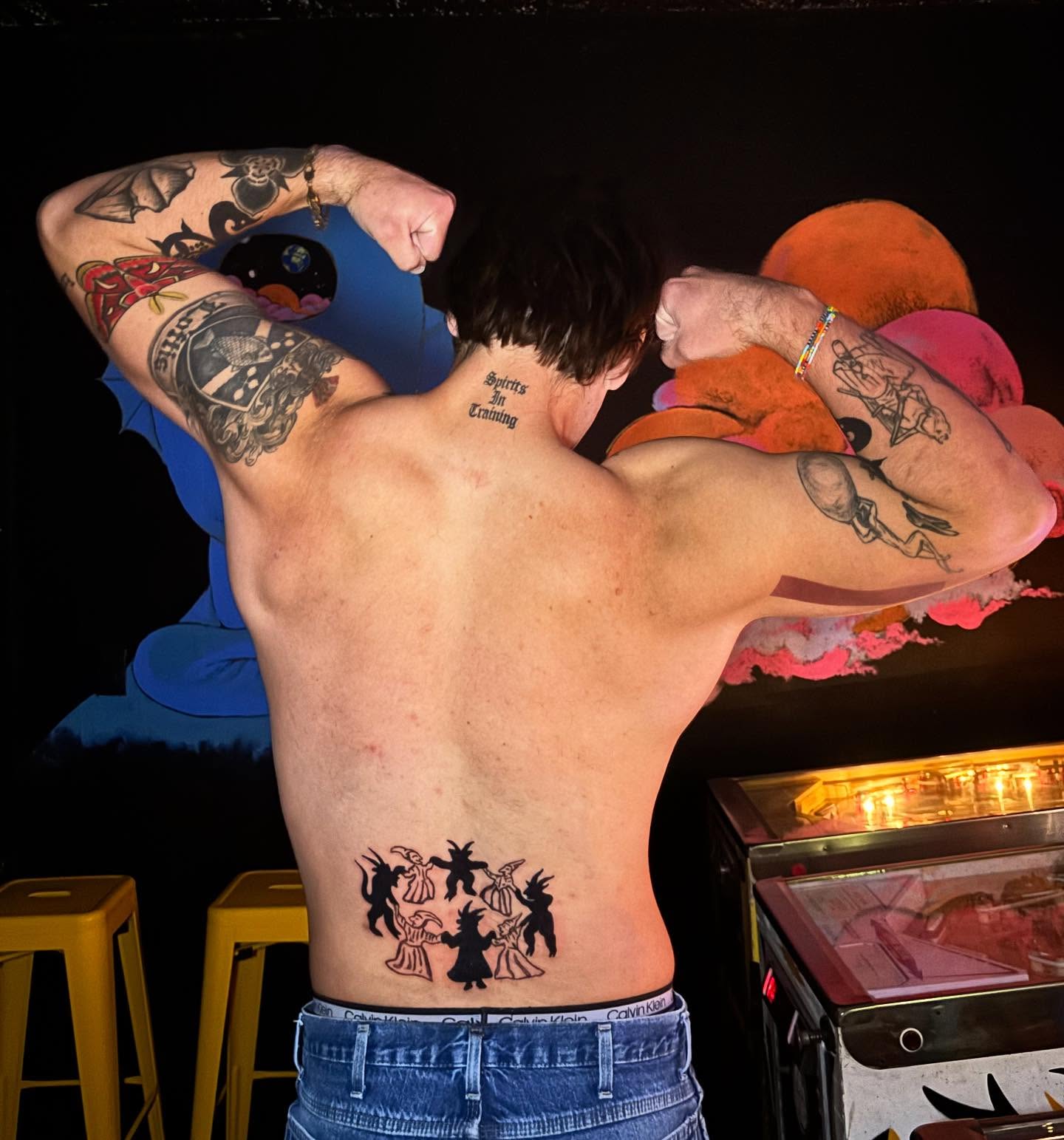
Witch Silhouettes Circle
This tramp stamp tattoo features a circle of stylized witches in black silhouette, dancing hand-in-hand. The design conveys themes of mysticism, unity, and perhaps a hint of playful witchcraft lore, positioned prominently on the lower back. Its bold yet simple black ink style emphasizes symbolism over intricate detail.
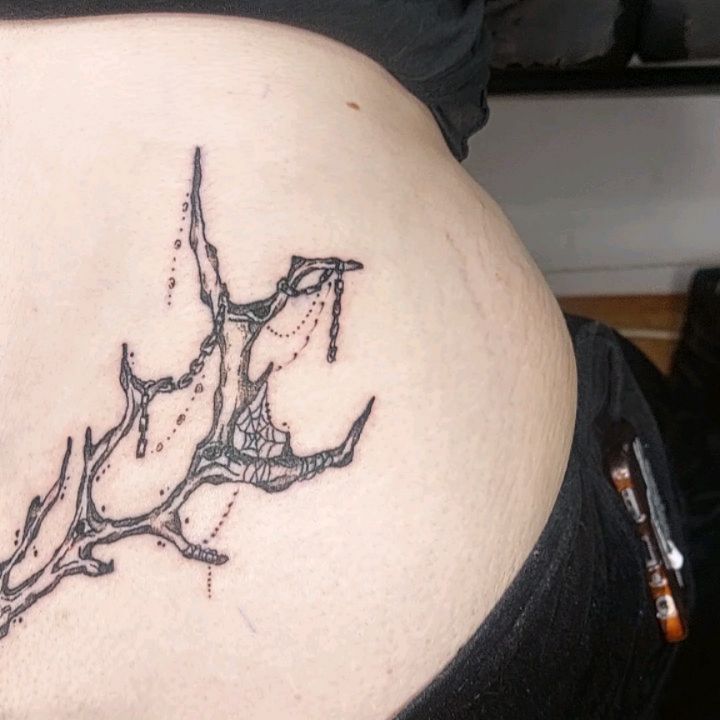
Delicate Branch Tramp Stamp
This tramp stamp tattoo features a delicate, bare branch adorned with small hanging beads and an intricate spider web detail. It symbolizes resilience and subtle elegance, blending nature-inspired elements with a minimalist aesthetic on the lower back area.
About This Style
Tramp stamp tattoos, historically placed on the lower back, have a complex and often misunderstood past. While the term itself carries a negative connotation, the art form of lower back tattooing has evolved significantly, reclaiming its space as a versatile and often beautiful canvas. Our extensive gallery provides a look at the breadth of designs, from the bold tribal patterns that defined the 90s and early 2000s to contemporary, intricate, and deeply personal pieces.
Historically, lower back tattoos were chosen for their aesthetic appeal, often accentuating the natural curve of the spine and hips. They offered a private yet alluring placement, easily concealed or revealed depending on the wearer's preference. As you browse the diverse images on this page, you'll see how artists have transformed this area, moving beyond simple butterflies and tribal bands to create stunning mandalas, delicate floral arrangements, powerful animal motifs, and even full narrative scenes. These images serve as inspiration, showcasing various outlines, stencils, and real-skin examples to help you visualize your next tattoo.
In recent years, there's been a notable shift in perception, with many individuals choosing lower back tattoos for their artistic merit and personal significance, rather than succumbing to societal labels. The versatility of this placement allows for both symmetrical and asymmetrical designs, adapting beautifully to various body types and artistic styles. Whether you're drawn to traditional, neo-traditional, blackwork, or watercolor styles, our collection aims to highlight the potential and artistry inherent in lower back tattooing. We invite you to explore these designs and rediscover the artistic potential of the "tramp stamp" as a meaningful and beautiful form of self-expression.
Frequently Asked Questions
The term "tramp stamp" is a derogatory slang term for a tattoo placed on the lower back, particularly popular in the late 1990s and early 2000s.
While the negative label persists, lower back tattoos themselves are experiencing a resurgence, with many people choosing them for artistic reasons and reclaiming the placement.
Common designs include tribal patterns, butterflies, floral motifs, celestial elements, mandalas, and intricate symmetrical patterns that complement the spinal curve.
The pain level can vary, but the lower back is generally considered a less painful area compared to bony spots, making it a relatively comfortable choice for many.
Yes, many artists specialize in cover-up tattoos, transforming older or unwanted lower back designs into new, beautiful pieces.
People choose lower back tattoos for various reasons, including aesthetic appeal, accentuating body curves, personal symbolism, and the ability to easily conceal or reveal the artwork.
Consider the design, style, size, and potential for future cover-ups or additions. Also, research artists specializing in this placement to ensure a high-quality outcome.